Will the US End Airport Pre-Clearance in Canada?
- Home
- Blog
- Pearson Airport Guide
- us ambassador warns canada of potential cuts to airport pre-clearance
US Ambassador to Canada Pete Hoekstra indicated that declining traveler volumes might force Washington to reassess its airport pre-clearance program in Canada. Speaking at the Global Business Forum in Banff on September 25, 2025, the ambassador linked dropping Canadian cross-border travel numbers directly to the operational expenses borne by the American government. Despite pushback from the forum moderator, Hoekstra followed up on these comments with a second warning during a CJAD radio interview in January 2026.
CBC+ 1
Pete Hoekstra explicitly tied declining traveler numbers to the high costs of maintaining pre-clearance operations.
Simple FlyingHe noted “you’ve got to take a look at some of these things” but clarified there is no formal announcement to end the program.
TravelPulse CanadaThe ambassador raised the issue entirely on his own initiative during the January 2026 CJAD radio interview.
Is This a Formal Threat or a Business Warning?
The remarks can be viewed either as strategic political posturing or as a genuine signal of a looming operational policy change. While Hoekstra initially offered the critique after being challenged at a live business panel, his decision to independently bring up the issue a second time demonstrates a deliberate pattern of communication.
The repeated mentions across multiple months suggest the U.S. government is actively evaluating the economic viability of the system.
U.S. Customs and Border Protection has not issued any formal, official announcements regarding service cuts or closures.
Table of Contents
Who Actually Pays for Pre-Clearance?
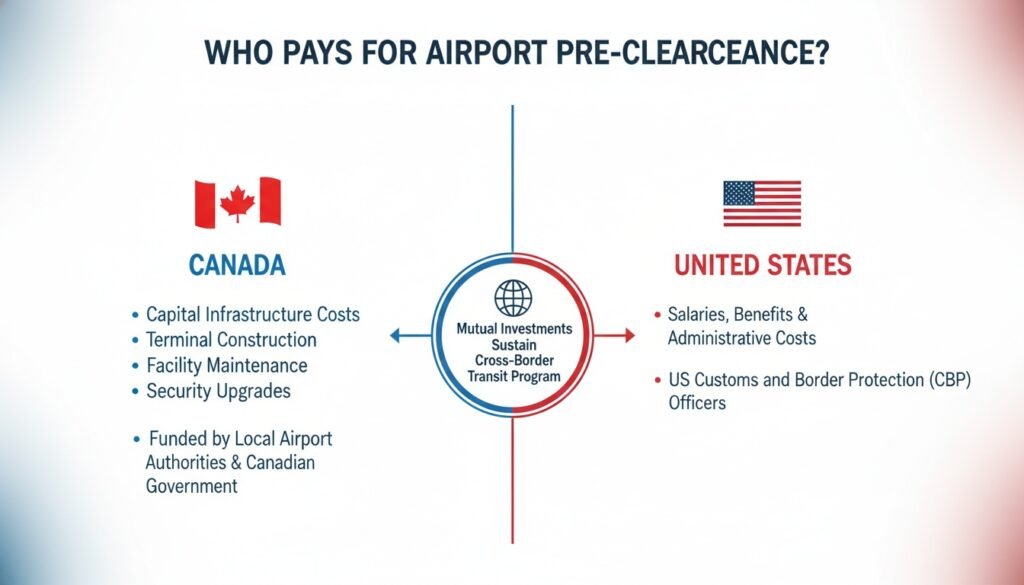
The financial responsibility for airport pre-clearance is split between both nations, contrary to recent claims suggesting the United States bears the entire burden. This funding model has sparked significant debate online, with many misinterpreting how the program’s infrastructure and staffing are actually financed.
Canada builds and entirely funds the physical airport infrastructure required for pre-clearance facilities.
The United States government covers the salaries and operational costs of the Customs and Border Protection (CBP) officers stationed there.
Travelers contribute directly to the program through application fees that go straight to the United States.
The claim that the US solely pays for the program is only half true.
Why Hoekstra’s Cost Argument Has Two Sides
The financial argument surrounding the US ambassador’s warning overlooks the original strategic purpose of the pre-clearance program. The United States originally pushed for and implemented this system to enhance its own national border security by vetting passengers before they ever touch down on American soil, rather than offering it strictly as a convenience for Canadian travelers.
Which Canadian Airports Currently Have US Pre-Clearance?
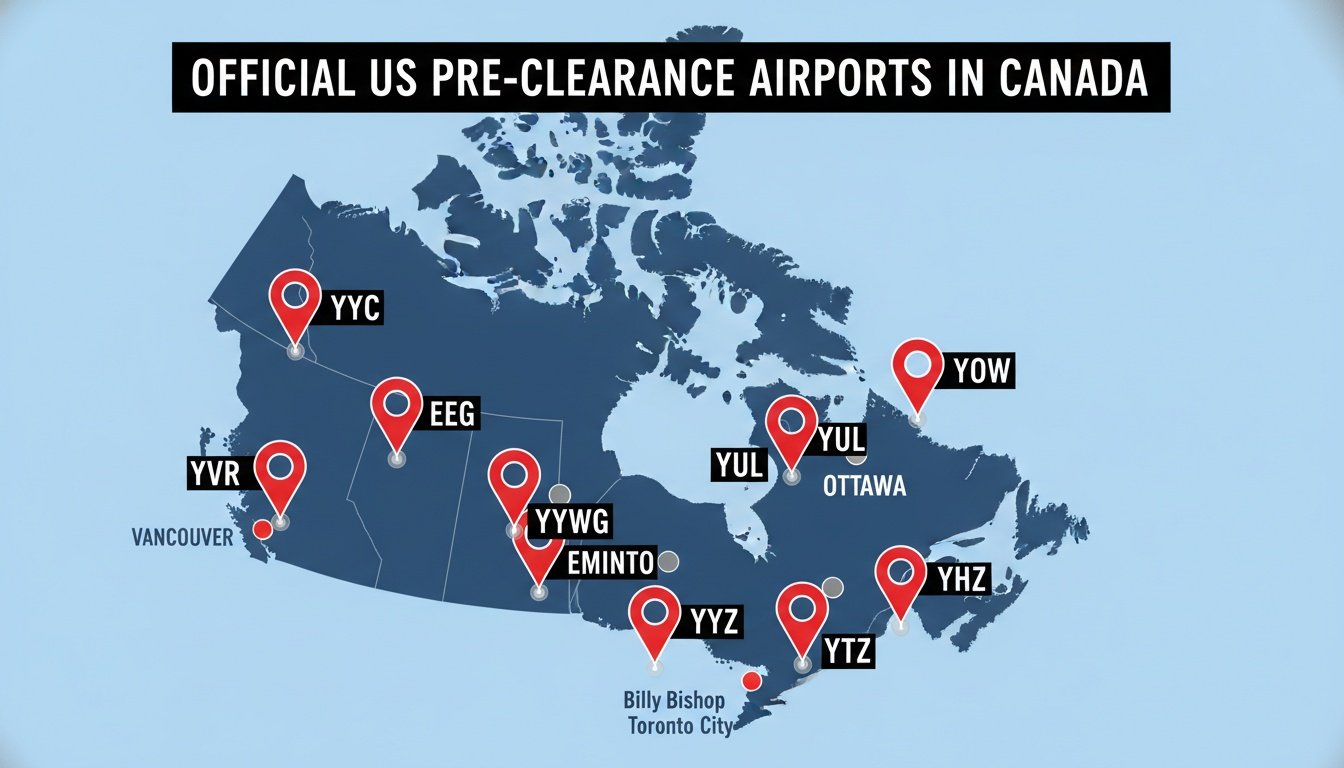
Nine major Canadian airports across the country provide US Customs and Border Protection (CBP) pre-clearance facilities. These dedicated terminals allow flyers to clear American customs, immigration, and agriculture inspections before their flight takes off.
The current list of Canadian airports equipped with US pre-clearance facilities includes:
Calgary International Airport (YYC)
Edmonton International Airport (YEG)
Halifax Stanfield International Airport (YHZ)
Montréal-Trudeau International Airport (YUL)
Ottawa Macdonald-Cartier International Airport (YOW)
Toronto Pearson International Airport (YYZ)
Billy Bishop Toronto City Airport (YTZ)
Vancouver International Airport (YVR)
Winnipeg Richardson International Airport (YWG)
Why These Airports Matter for Your Route Planning
Flying out of a pre-clearance airport gives travelers the freedom to land at smaller or regional US destinations that completely lack customs facilities. Because you arrive as a domestic passenger, airlines can route flights directly into domestic gates at major, congested hubs like New York’s LaGuardia Airport.
Choosing a route with pre-clearance alters your travel schedule and destination options in the following ways:
Access to more airports: You can fly directly into over 160 American airports that do not have international customs processing units.
Faster connections: Arriving as a domestic traveler eliminates the need to collect luggage and clear customs during a layover, making tight connection windows highly manageable.
Predictable scheduling: Clearing customs before departure ensures that any border delays happen at your origin, protecting your arrival timeline in the United States.
US Ambassador THREATENS Canadian Tourists!
This video provides a detailed journalistic breakdown of the recent remarks made by the US Ambassador regarding the potential reassessment of the pre-clearance program.
What Happens to Your Travel If Pre-Clearance Is Cut?
If the US Ambassador warns Canada of potential cuts to airport pre-clearance and the program is scale back, your transit experience will face severe logistical delays. Passengers would no longer bypass the traditional customs lines upon touching down on American soil.
Losing this convenience shifts the entire customs process to your arrival terminal, creating immediate disruptions:
Extended wait times: Travelers must join the standard international customs lines in the US, adding an estimated 30 to 90 minutes of processing time after landing.
Loss of domestic status: Flights originating from Canada will no longer land as domestic arrivals, significantly increasing the risk of missing tightly scheduled connecting flights.
Longer travel days: The elimination of pre-departure screening predictably inflates overall door-to-door transit times for all southbound flyers.
Business Travelers — LaGuardia and Reagan Airport Problem
Major business hubs like New York’s LaGuardia Airport (LGA) and Washington, D.C.’s Ronald Reagan Washington National Airport (DCA) do not house international customs facilities. If pre-clearance is cut, direct flights from Canada to these specific airports would become impossible. Airlines would be forced to reroute passengers to larger, more congested hubs like John F. Kennedy International Airport (JFK) or Washington Dulles International Airport (IAD), disrupting tight business schedules.
Flytrippers
Why Safety Is the Real Concern for Many Travelers
Frequent flyers on platform discussions like Reddit express deep concern over how a program cancellation shifts legal jurisdictions. When clearing customs via pre-clearance on Canadian soil, travelers remain under the protection of Canadian law, whereas clearing customs at a US airport places them entirely under US legal jurisdiction.
Frequent business travelers highlight that this distinction serves as a critical safety net for two primary reasons:
Lower secondary screening risk: Undergoing additional screening inside a Canadian terminal offers a more controlled environment with familiar legal protections.
Legal peace of mind: Travelers feel significantly more secure managing border issues or potential entry denials before they have physically left Canada.
2026 FIFA World Cup Impact
The timing of potential pre-clearance reductions poses a major threat to the upcoming 2026 FIFA World Cup logistics. Thousands of international soccer fans plan to use Canadian cities as base camps while commuting back and forth to match venues across the United States. Eliminating pre-clearance right before the tournament kicks off would trigger massive processing bottlenecks at border entry points, disrupting match day timelines for global travelers.
Is Pre-Clearance Actually Going to Be Cut?
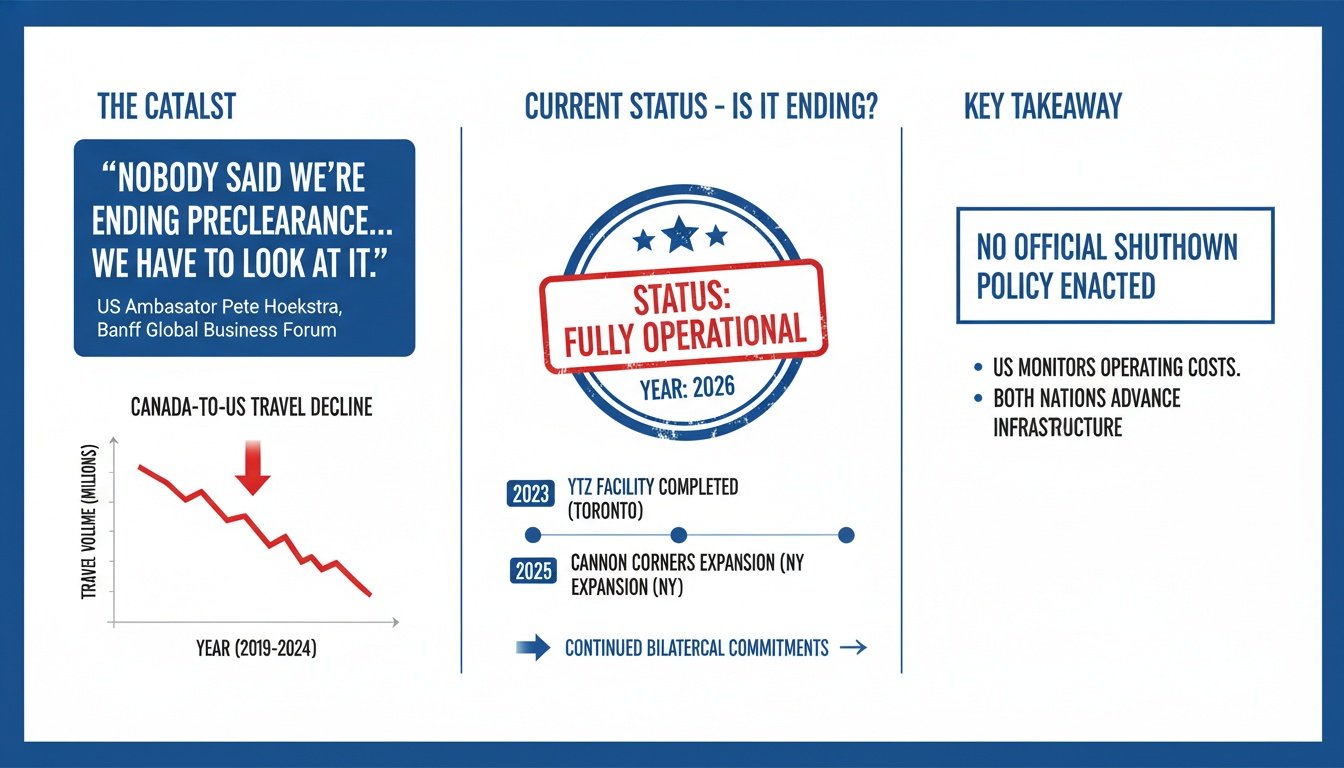
The US pre-clearance program is not facing an immediate or definite cancellation, but the operation is undergoing intense financial scrutiny from Washington. While the US Ambassador warns Canada of potential cuts to airport pre-clearance due to shifting travel volumes, complete termination remains highly unlikely due to the massive scale of the program. Both countries have deeply integrated logistical, security, and financial dependencies that make a total shutdown impractical for both sides.
The case against cutting the program highlights its overwhelming benefits to cross-border infrastructure and major airlines:
High passenger volume: Over 22 million travelers were pre-cleared globally in 2024, with Canadian facilities handling the vast majority of these passengers to keep the US aviation ecosystem running smoothly.
TravelPulse CanadaSevere route disruptions: Shutting down the program would completely eliminate direct flights from Canada to high-traffic hubs like New York’s LaGuardia (LGA) and Washington’s Reagan National (DCA), which lack international customs facilities.
FlytrippersMajor economic blow to airlines: US and Canadian carriers would face immediate operational chaos, leading to longer delays and a further reduction in lucrative business travel bookings.
The arguments favoring potential cuts or adjustments stem entirely from changing travel metrics and operational costs:
Decreased travel volumes: Recent data shows a 25% drop in cross-border air travel alongside a 33% decline in overall transborder trips, altering the economic justification for these sites.
TravelweekStrained US resources: The United States government funds the program entirely at its own expense, spending significant resources to station over 600 customs officers abroad.
TravelPulse CanadaRe-evaluation of operational logic: US officials state that if passenger numbers continue to dwindle, maintaining high staffing costs at foreign stations becomes difficult to justify from a strict business perspective.
What the Aviation Industry Says
Aviation experts and industry analysts emphasize that scaling back or eliminating pre-clearance would inflict severe economic damage on both Canadian and American aviation sectors. Removing these customs facilities would immediately dissolve the competitive advantage held by Canadian airlines, which market efficient connection times to international travelers routing through Canada to the US. Without pre-clearance, passengers would face standard international arrivals queues at major US hubs, adding two to three hours to standard travel times and heavily disrupting transborder commerce.
CBC+ 1
Should You Cancel Your US Travel Plans?
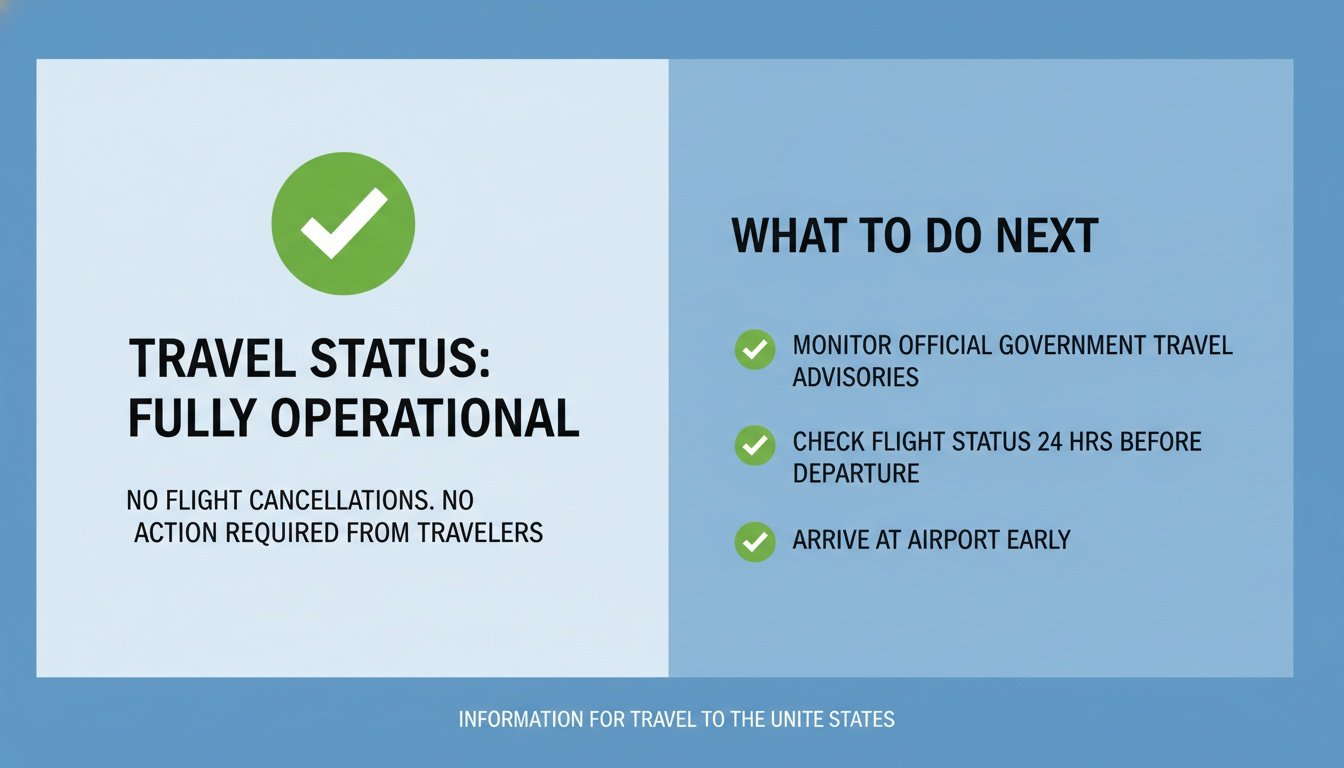
You do not need to cancel your upcoming travel plans to the United States. While the US Ambassador warns Canada of potential cuts to airport pre-clearance, no formal structural changes or service cancellations have been announced. The pre-clearance program remains fully active and operational at all designated locations.
Consider these immediate, practical adjustments to ensure smooth transit moving forward:
Review specific route layouts: If your itinerary relies heavily on direct flights into New York LaGuardia (LGA) or Washington Reagan National (DCA), monitor updates closely as these destinations do not have standard international customs facilities.
FlytrippersPrepare alternative flight paths: Look into backup routes connecting through larger US international hubs like JFK or Dulles (IAD) where standard customs processing is always available if required.
Secure a NEXUS membership: Applying for or renewing a NEXUS card provides a highly reliable processing safety net that benefits travelers across both air and land borders regardless of airport program shifts.
NEXUS Card — Should You Get It Now?
Securing a NEXUS card is a highly practical step to take right now, as the program remains a vital asset for frequent cross-border travelers. Even if specific airport pre-clearance operations face future administrative changes, NEXUS membership continues to provide independent, expedited border privileges. The dedicated security lanes minimize travel disruption and ensure predictable schedules.
A NEXUS membership guarantees several distinct advantages for managing your future travel security:
Under two minutes processing: Cardholders gain access to dedicated, self-service airport kiosks that process identity and customs verifications in less than two minutes.
Land border utility: The membership is fully functional at land crossings, providing dedicated commuter lanes that bypass standard commercial border traffic delays.
Integrated TSA PreCheck: Flying out of US airports on your return journey grants automatic access to TSA PreCheck lanes, accelerating domestic security screenings.
Frequently Asked Questions
No formal decision has been made to end the program as of June 2026. While the US Ambassador warns Canada of potential cuts to airport pre-clearance due to lower cross-border traveler volumes, the comments represent a call to re-examine the financial viability rather than an active shutdown order.
If the United States decides to scale back services, all nine Canadian airports currently operating US Customs and Border Protection pre-clearance facilities could face service reductions or closures. This includes primary travel hubs across the country such as Toronto Pearson (YYZ), Vancouver (YVR), Montreal (YUL), Calgary (YYC), and Billy Bishop Toronto City (YTZ).
Both sides carry substantial operational costs, which makes the threat of budget cuts a complex bilateral issue. The Canadian government and local airport authorities fund the physical terminal infrastructure, while the United States government pays the salaries and operational costs of the stationed American border officers.
There is absolutely no need to cancel your upcoming travel plans to the United States based on these preliminary discussions. The pre-clearance facilities remain fully operational across Canada, but busy business travelers should actively monitor official government advisories for updates.
Direct flights from Canada to LaGuardia Airport (LGA) and Ronald Reagan Washington National Airport (DCA) would be forced to stop if pre-clearance is terminated. Because these specific US airports lack international customs processing facilities, they cannot legally accept flights arriving directly from foreign origins without pre-clearance.