Car Seat Sanitization Protocol for Limo Services: The Complete Hygiene Standard
A professional car seat sanitization protocol for limo services is a strict, multi-step hygiene standard requiring medical-grade, child-safe sanitizers to disinfect all high-touch surfaces between every single rental. Unlike standard vehicle detailing, this targeted process utilizes non-toxic, EPA-approved botanical disinfectants or low-moisture steam extraction to eliminate bacteria, viruses, and allergens without degrading the seat’s structural integrity or leaving chemical residues that could harm a child.
Table of Contents
Why Cloth Seats Need a Different Protocol Than Leather
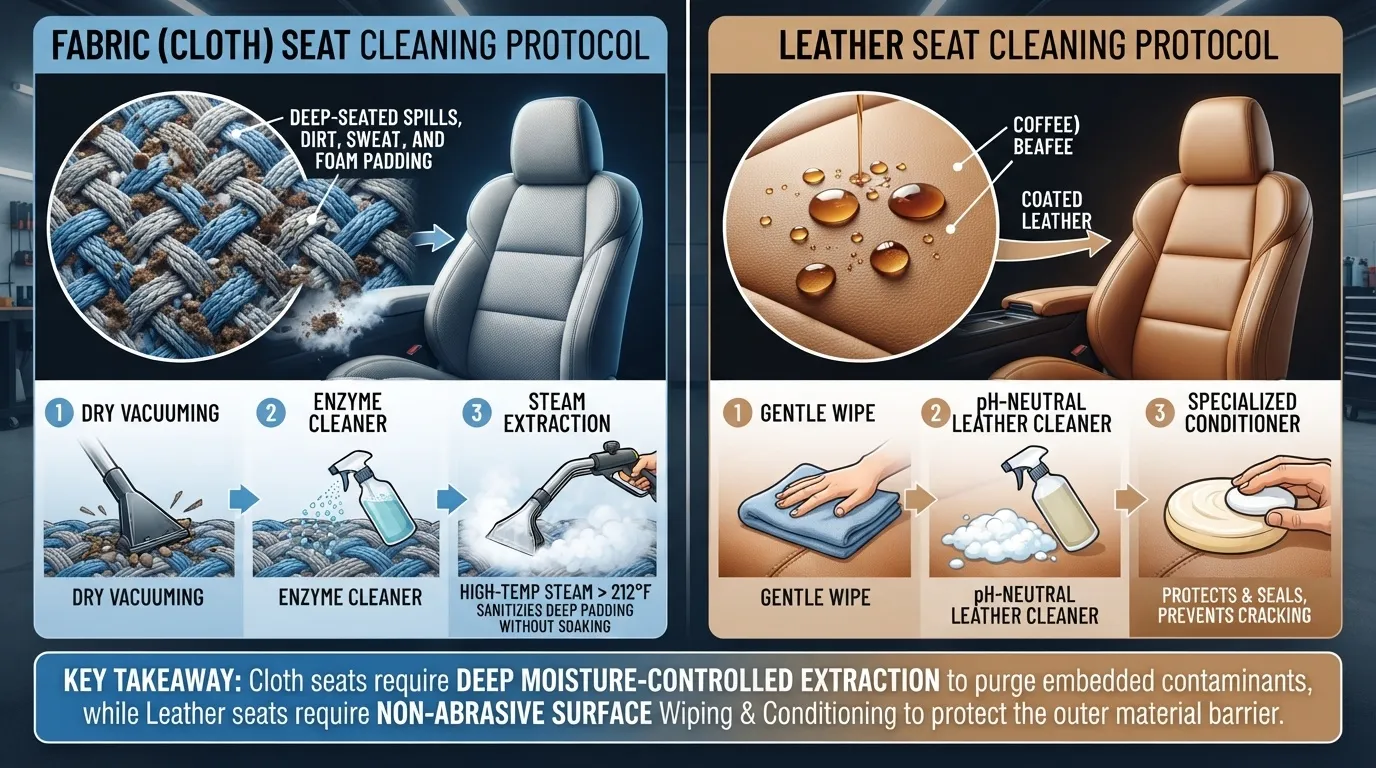
Cloth fabric acts like a sponge, absorbing liquids, sweat, and spilled milk deep into the foam backing beneath the surface. Unlike leather or vinyl, which can be disinfected with a quick wipe-down, cloth harbors bacteria and allergens deep within its weave where surface cleaning cannot reach.
Because of these material differences, your choice of cleaning products and methods must adapt:
Cloth upholstery requires enzyme-based cleaners to break down organic proteins, followed by low-moisture steam extraction to kill pathogens inside the cushion without oversaturating the foam and causing mold.
Leather and vinyl surfaces demand pH-neutral, non-bleach disinfectant wipes that destroy surface viruses without stripping the material’s protective finish or causing cracking over time.
Using harsh liquid disinfectants on cloth seats often drives organic contaminants deeper into the cushion rather than removing them. Proper car seat sanitization protocol for limo services requires treating porous fabrics with extraction techniques while reserving surface wipes strictly for non-porous leather or plastic components.
Step-by-Step Car Seat Sanitization Protocol
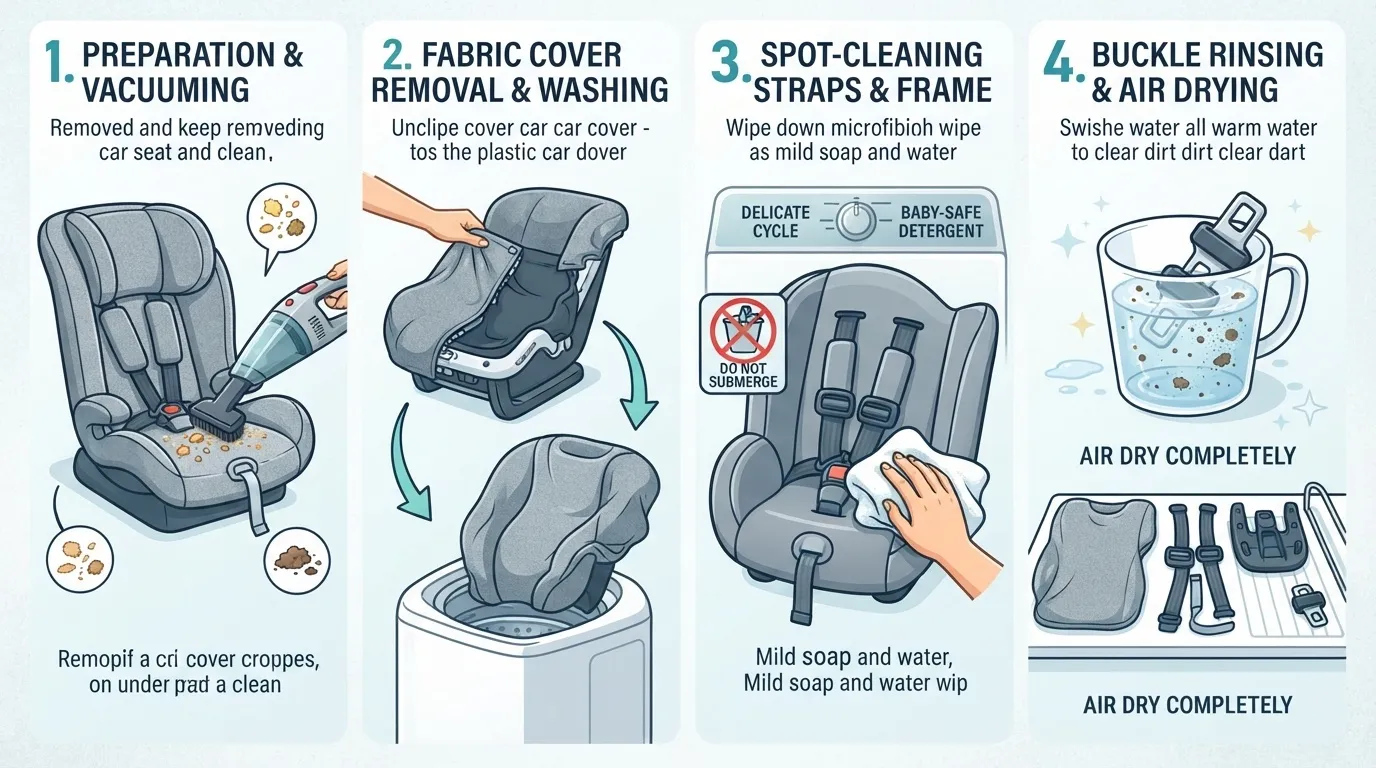
Vacuum Loose Debris: Remove large crumbs and dirt from every crevice, buckle housing, and under the fabric cover using a narrow crevice tool attachment to prevent scratching surfaces during scrubbing.
Pre-Treat Hard Plastic Surfaces: Spray a mild alkaline degreaser diluted at a 10:1 ratio onto plastic shells and base components to break down oils, grease, and sticky food residues without degrading the plastic’s structural integrity.
Apply Enzyme-Based Disinfectant: Mist an EPA-registered, child-safe enzyme cleaner across fabric areas and plastic housing to break down organic proteins, bacteria, and virus-causing compounds at a molecular level.
Scrub Fabrics Gently: Agitate the enzyme solution on cloth covers and harness webbing using a soft-bristle horsehair brush or lint-free microfiber towel to lift embedded grime without fraying critical safety straps.
Hot Water or Steam Extraction: Extract residual moisture and deep-seated pathogens using a commercial steam extractor operating under low pressure (below 50 PSI) to sanitize without soaking internal foam padding.
Air Dry and Ventilate: Allow the seat to air dry completely in a well-ventilated space or under forced cold air for at least 30 to 45 minutes before reinstalling or boarding the next passenger.
Sanitization Frequency Schedule
Between-Ride Quick Disinfect
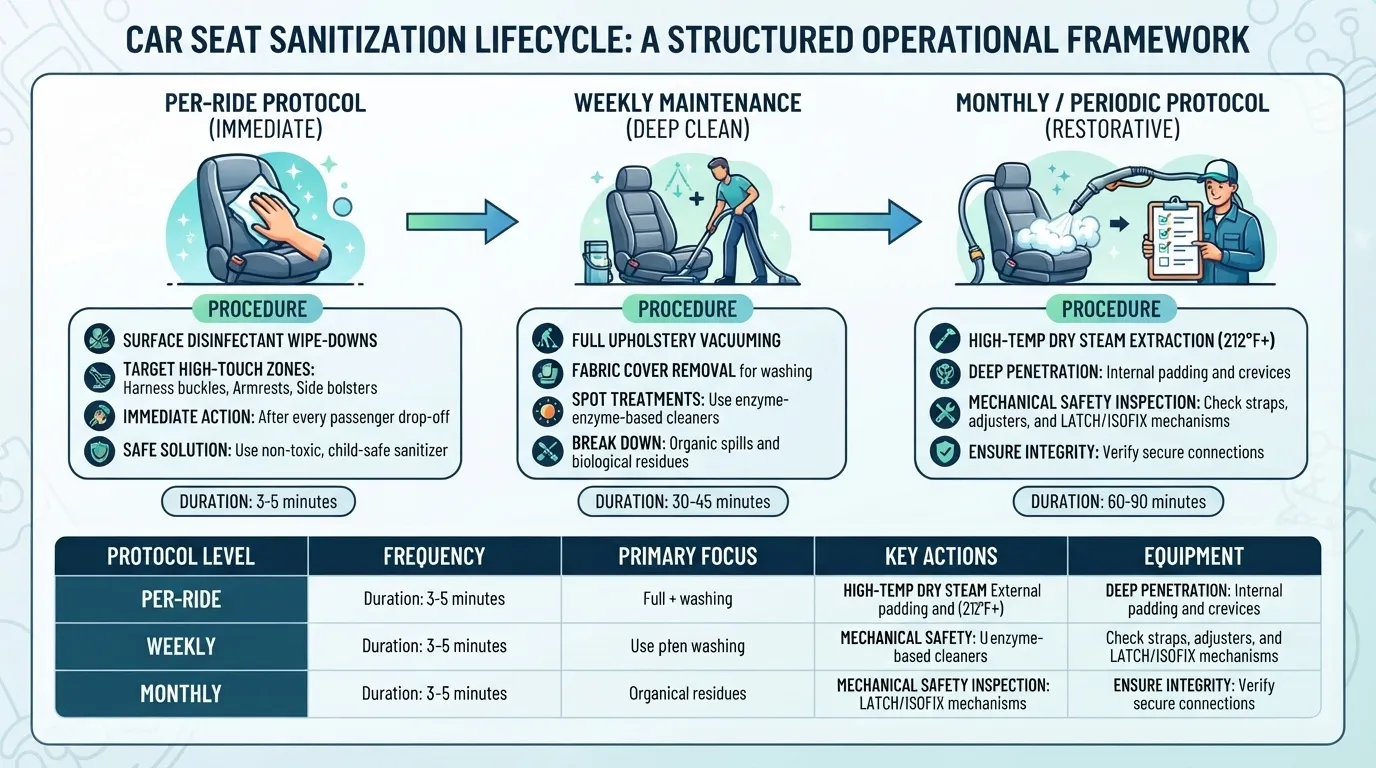
High-touch areas require immediate attention after every passenger exit. Focus on the seatbelt buckle, chest clip, plastic shell edges, and headrest side wings using a fragrance-free, child-safe EPA-registered disinfectant wipe. Harness straps should only be spot-wiped with a damp microfiber cloth and mild dish soap to preserve webbed fiber strength.
Daily Wipe-Down
At the end of each shift, conduct a full surface wipe down of the plastic shell, buckles, and cup holders using an enzyme-based cleaner to break down organic residues like dried milk, food oils, or saliva. Check all crevices with a detail brush to clear loose debris that can jam buckle latching mechanisms.
Weekly Deep Clean
Remove fabric covers completely to vacuum trapped crumbs from the underlying shell frame. Treat removable seat covers and padding with low-moisture steam extraction at $212^\circ\text{F}$ ($100^\circ\text{C}$) or machine wash them on a gentle cycle using clear, fragrance-free detergent according to the manufacturer’s manual. Ensure all fabric components dry 100% to prevent mold growth inside the foam.
Post-Illness or Heavy Spill Trigger
Any instance of bodily fluids (vomit, diaper leaks, urine) triggers an immediate, full-scope teardown before the vehicle’s next dispatch. Perform a deep enzyme treatment on the affected padding followed by high-temperature steam extraction. If fluid saturates the internal nylon webbing of the harness straps, replace the harness entirely—harsh sanitizers and soaking degrade the load-bearing integrity of safety webbing.
Why Car Seat Sanitization Matters for Young Children
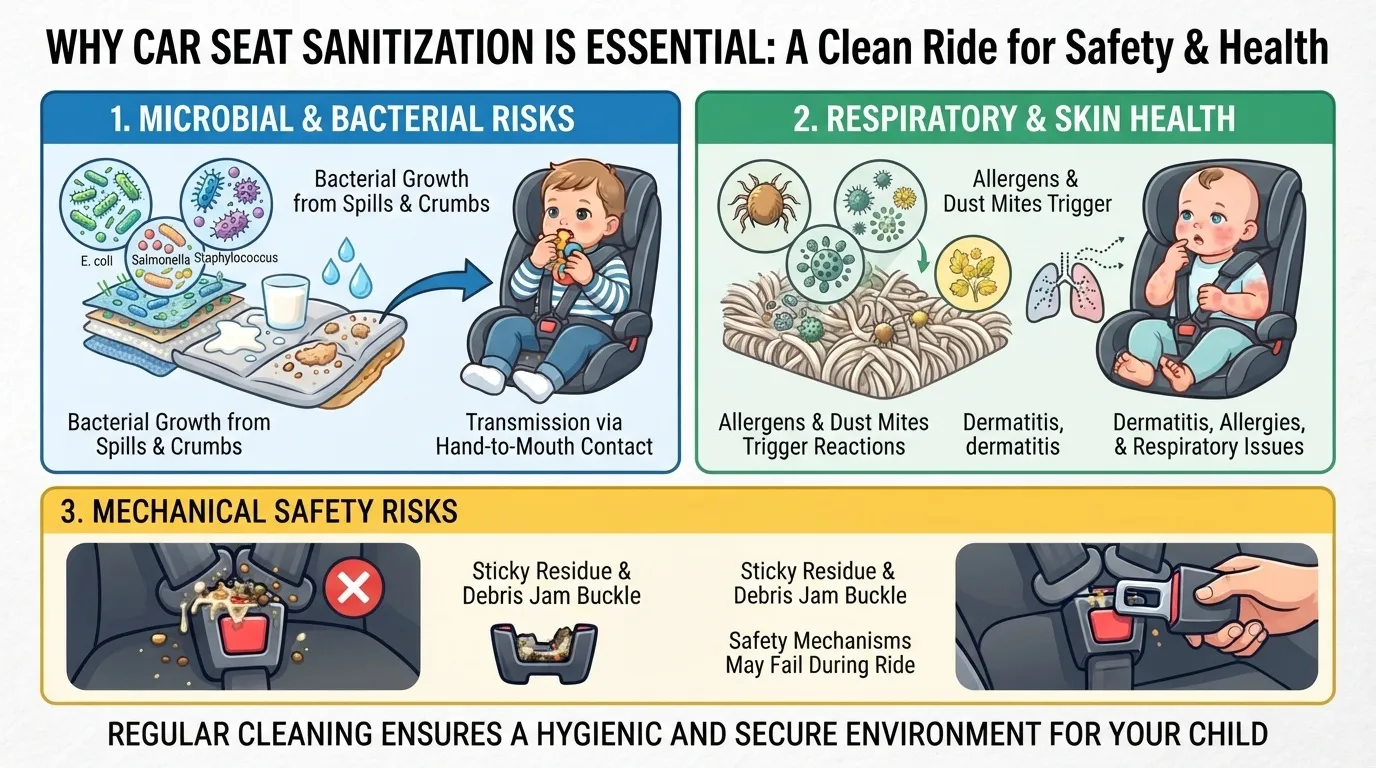
Infants and toddlers naturally explore their environment using their hands and mouths. This constant hand-to-mouth behavior means any pathogen living on a vehicle’s seat, harness buckle, or adjustment strap can easily enter a child’s digestive system.
Professional ground transportation vehicles host a continuous cycle of passengers, turning child seats into major cross-contamination points. Key risk factors include:
High-Touch Zone Contamination: Buckles, chest clips, and hard plastic shells frequently collect residues from adult hands, airborne droplets, and previous liquid spills.
Dropped Objects: Pacifiers, teethers, and favorite toys frequently fall into the crevices of the car seat shell or touch the surrounding upholstery before going straight back into a child’s mouth.
Porous Fabric Traps: Woven seat covers trap organic matter, skin flakes, and bacteria deep within their fibers where surface-level cleaning cannot reach.
A quick surface wipe-down leaves these microscopic threats intact. Eliminating microbial hazards before a young child climbs into the vehicle requires a dedicated sanitization protocol that uses non-toxic, child-safe disinfected heat and targeted enzyme treatments.
What Separates a Verified Protocol from a Marketing Claim
Most fleet operators claim their child safety seats are sanitized, but broad promises rarely guarantee proper hygiene. A genuine car seat sanitization protocol relies on verifiable practices, clear documentation, and adherence to manufacturer safety guidelines rather than vague marketing language.
When evaluating whether a transport provider follows an authentic sanitization standard, look for these specific indicators:
A Documented Sanitation Log: Trustworthy operators track cleaning history per vehicle and car seat unit. These logs record the exact timestamp, the technician or driver responsible, and whether the service was a quick post-ride wipe-down or a scheduled deep-clean cycle.
Transparent Method Disclosure: Credible services specify their exact tools and solutions—such as low-moisture steam extraction or enzyme-based spot treatments—instead of using generic terms like “disinfected.” They also explicitly avoid harsh solvents or bleach on harness webbing, which can degrade tensile strength and compromise crash integrity.
Alignment with Official Health Guidelines: Reputable protocols mirror standards set by public health agencies and child passenger safety technicians (CPST). They observe required disinfectant dwell times (often 3 to 10 minutes) and use non-toxic, fragrance-free solutions that leave no harmful chemical residue for young children.
Frequently Asked Questions
Use mild, pH-neutral soap with warm water or non-bleach EPA-registered disinfectants approved specifically for fabrics. Harsh chemicals, bleach, and heavy solvents break down flame-retardant seat coatings and weaken structural fibers over time.
Alcohol sprays only kill surface bacteria on contact, but they cannot break down organic soils like milk spills, vomit, or saliva. Enzyme-based cleaners are necessary because they actively digest organic matter at a molecular level, eliminating embedded odor sources and residue entirely rather than masking them.
A surface wipe-down using child-safe disinfectant wipes is mandatory after every passenger turnover to prevent cross-contamination between families. Daily schedules should be reserved for deeper maintenance, such as steam extraction and full harness inspections.
High-temperature dry steam (reaching above 212°F) sanitizes deep into fabric padding without soaking the internal foam or leaving chemical residues behind. This heat thermal-kills 99.9% of bacteria and dust mites instantly while preventing mold or mildew growth caused by excess moisture.
Explore Airport Topics
Our Services
Featured Travel Guides
Billy Bishop Airport Limo Cost
Why Choose a Limousine Over Rideshare
How to Get to Billy Bishop Airport
Beck Taxi vs Limo Service: Flat Rate Comparison
Medical Transportation Limo Toronto
SUV vs Sedan — Airport Luggage Capacity
View All Travel Guides →Industry & Safety Standards
Our Service Guarantee
Every guide is written from real chauffeur and dispatch experience — flat-rate pricing, licensed vehicles and 24/7 flight-monitored pickups across Toronto & the GTA.
24/7 Quick Response
+1 (647) 654-4915