How to Choose a Good Limo Service and Avoid Low-Quality Operators
Core Steps to Identify Legitimate Limo Operators
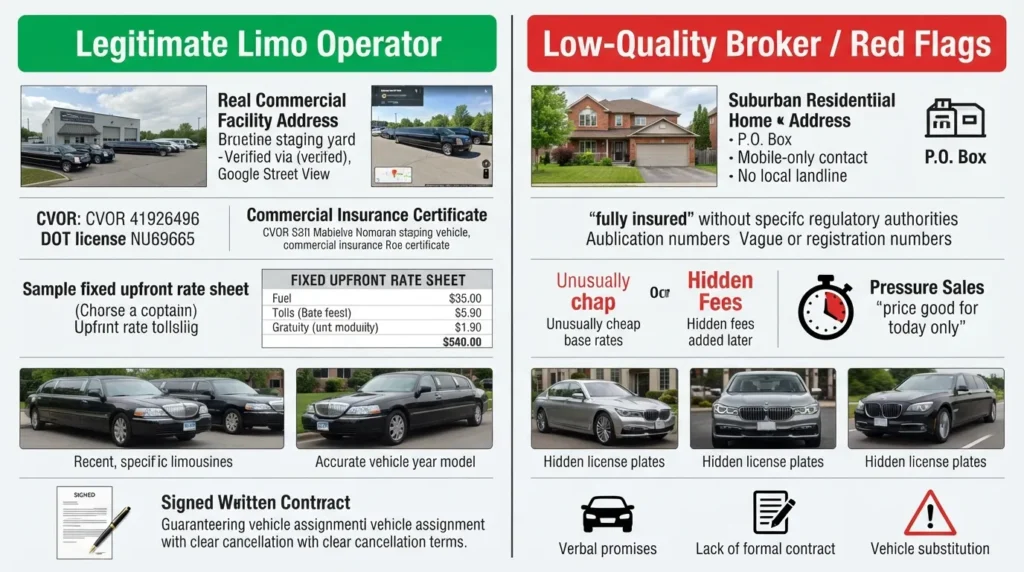
Choosing a reliable limousine service comes down to verifying four concrete markers before signing a contract or paying a deposit: active government licensing, commercial passenger insurance, transparent itemized pricing, and consistent customer feedback across independent platforms. A legitimate operator holds a valid provincial commercial carrier registration (such as an Ontario CVOR) and municipal vehicle-for-hire permits, paired with at least $2 million in commercial general liability coverage. They provide written contracts with line-item breakdowns of base rates, tolls, fuel surcharges, and gratuities rather than vague verbal quotes. Finally, established operators maintain a verified physical yard address and a track record of specific, long-term reviews on third-party sites like Google Business and the Better Business Bureau rather than relying solely on website testimonials.
Table of Contents
The Verification Checklist

Vehicle Operator Verification Checklist
Essential criteria to review before booking commercial transportation services
Red Flags Beyond the Checklist
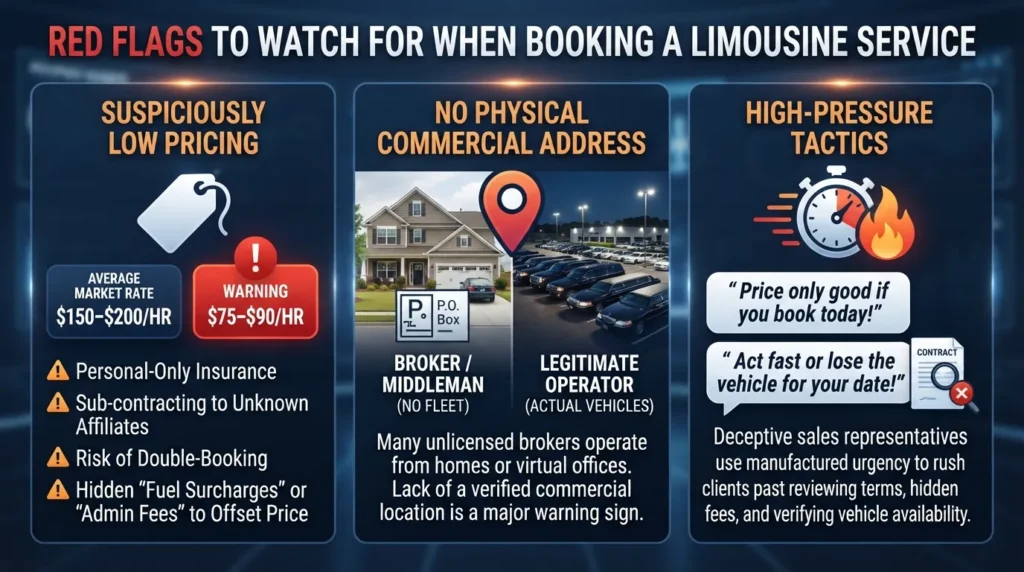
https://vipairportlimoservice.com/toronto-to-niagara-falls-limo/Suspiciously cheap quotes are almost always a deposit trap or a setup for a last-minute vehicle swap. If average market rates in the Greater Toronto Area run around $150–$200 per hour for a late-model stretch sedan, an operator offering $75–$90 per hour is cutting costs somewhere dangerous—usually by dropping commercial vehicle insurance down to personal coverage, running uninsured sub-contractors, or double-booking the vehicle and leaving you stranded if a higher-paying client comes along.
Legitimate limo companies operate physical yards, maintain vehicle bays, and run dispatch operations from fixed commercial locations. A company listing only a P.O. Box, a residential home address, or a single mobile phone number with no local landline often signals a lead-generation broker. These middlemen sell your booking to whichever unvetted driver accepts the lowest payout on the day of your event, taking zero responsibility when the vehicle arrives dirty or late. You can spot this quickly by running the business address through Google Maps Street View; if it resolves to a suburban driveway or an empty plaza lot, you are dealing with a broker, not a fleet owner.
Aggressive sales tactics are another clear indicator of a high-risk provider. Reputable companies provide written quotes valid for a standard period (typically 7 to 14 days) so you can review contract terms. A sales representative pushing high-pressure statements like “this rate is only good if you sign right now” or “someone else is looking at this exact limo for Saturday” is trying to rush you past reading the cancellation clause, deposit forfeiture terms, or hidden fuel surcharges.
A Real-World Middleman Scenario
Consider a prom booking where a coordinator secures a 10-passenger stretch for $600 through a company boasting slick online photos. The day before the event, the company calls claiming the stretch had a “sudden mechanical issue” and offers a standard 12-passenger van instead—no refund, take it or leave it. In reality, the company owned zero cars, tried to outsource the job to a local operator for $400, failed to secure a driver at that price point, and forced a downgrade to avoid refunding the non-refundable deposit.
Common Booking Scams
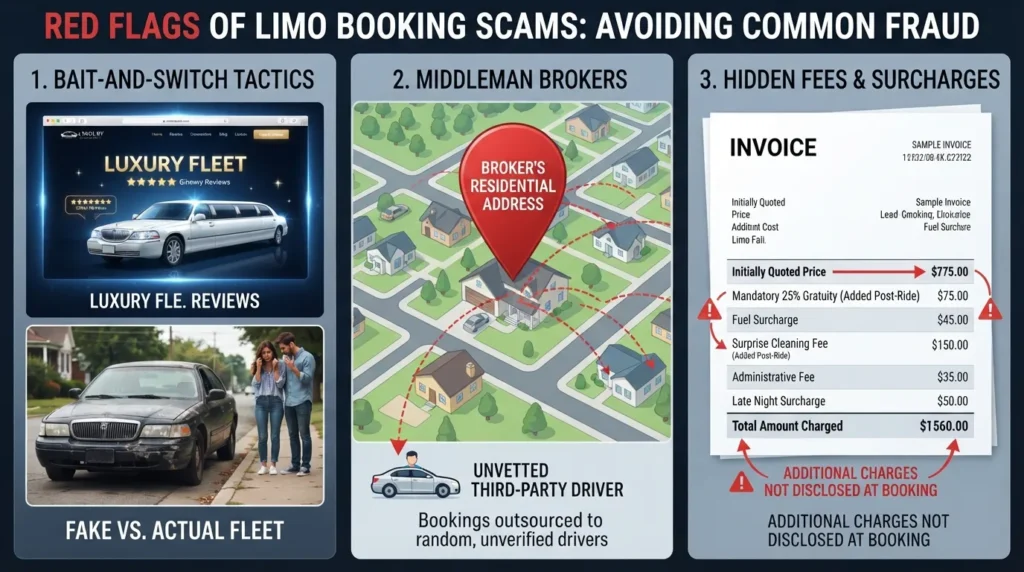
Last-minute price hikes occur when an operator takes advantage of your timeline leverage right before an event. Unscrupulous companies contact clients hours before pickup claiming mandatory charges like a $150 “prime-time traffic fee,” a 20% “unlisted gratuity,” or fuel surcharges were missed in the initial quote. Because finding a replacement vehicle on short notice is nearly impossible, clients are forced to pay the inflated balance or lose their non-refundable deposit.
Day-of vehicle swapping is a classic bait-and-switch executed by brokers and operators running overbooked fleets. You book a late-model Lincoln MKT or a 10-passenger stretch limo, but an aging passenger van or standard SUV arrives at your door instead. The driver typically claims your reserved vehicle suffered an “unexpected mechanical failure,” gambling that you will accept the lower-tier ride rather than disrupt your wedding or airport schedule.
Fake review clusters are manufactured to hide poor service records behind artificially high ratings. You can spot these visually by checking Google Business profiles for dozens of 5-star reviews posted within the same 48-to-72-hour window, often from accounts with only one total review and no profile photo. Legitimate operators build reviews steadily over months and years, whereas scam operations display sharp, unnatural spikes in feedback followed by periods of complete silence.
Legit vs. Low-Quality Operator
Frequently Asked Questions – Bus from Pearson to London
Standard stretch limousines and SUV stretches do not have onboard bathrooms due to space and weight restrictions. Only high-capacity party buses or 40+ passenger executive motor coaches feature built-in restrooms; any operator promising a restroom inside a standard stretch limo is misrepresenting their fleet.
For groups exceeding 10 to 12 passengers, a Mercedes Sprinter van or a luxury executive mini-bus is usually better than a stretch limo. These options provide full stand-up headroom, individual leather seating, and dedicated luggage space without the cramped seating conditions of an overloaded stretch vehicle.
Yes, "limo" is simply a shortened term for "limousine," referring to any chauffeured vehicle with a partition between the driver and passenger compartment. However, low-quality operators often use the term loosely to pass off standard livery sedans or basic rideshare vehicles as premium luxury stretch limousines.
While UberX appears cheaper upfront, flat-rate airport limos often end up comparable or cheaper during peak travel times due to surge pricing and toll add-ons. Legitimate airport limo services guarantee fixed rates, commercial insurance, and pre-arranged pickups, protecting you from driver cancellations or sudden price spikes at Pearson (YYZ).
Explore Airport Topics
Our Services
Featured Travel Guides
Industry & Safety Standards
Our Service Guarantee
Every guide is written from real chauffeur and dispatch experience — flat-rate pricing, licensed vehicles and 24/7 flight-monitored pickups across Toronto & the GTA.