Corporate Roadshow Transportation Planning: The Complete Guide for Executive and Financial Roadshows
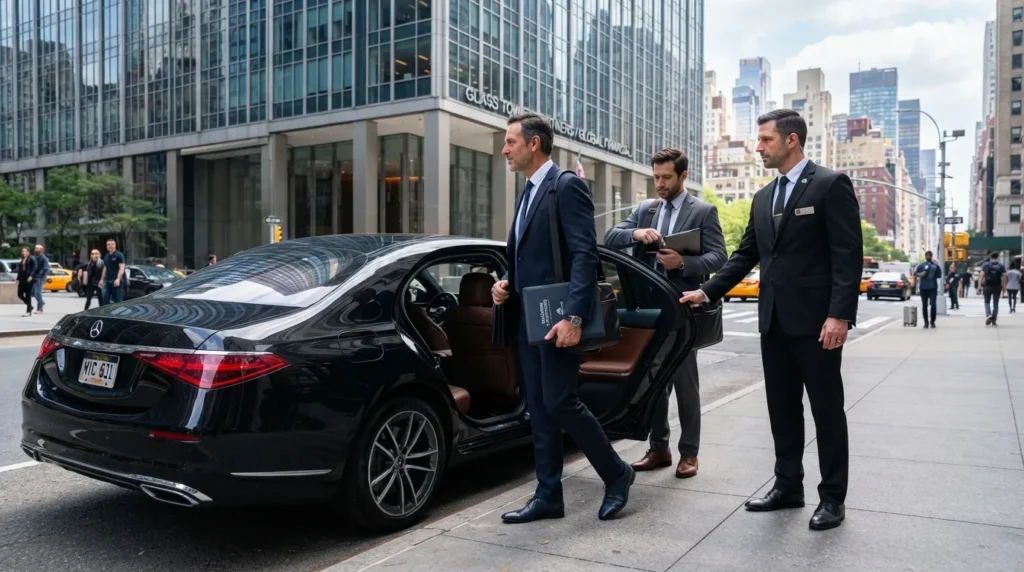
Planning transportation for a corporate roadshow is different from booking a regular corporate ride. You’re usually coordinating multiple executives, tight back-to-back meeting windows, several cities or stops in a single day, and zero room for a late arrival. The short answer: a successful roadshow transportation plan comes down to four things done well — a clear passenger and schedule brief, the right vehicle for each leg, a realistic route with buffer time, and a backup plan if something changes at the last minute. Below is a complete walkthrough of how to plan it properly, whether you’re organizing an investor-facing financial roadshow or an internal executive roadshow between offices and meetings.
What Counts as a Corporate Roadshow, and Why Transportation Planning Is Different
A corporate roadshow usually falls into one of two categories, and the transportation needs of each are slightly different.
A financial or investor roadshow is the series of meetings a company’s management team and underwriters run before an IPO, bond offering, or major fundraising round. These trips are usually packed into just a few days, span multiple cities, and involve senior executives who cannot be late to a single meeting without it affecting how investors perceive the deal.
An executive or promotional roadshow is more common for product launches, brand tours, or a leadership team visiting regional offices, partners, or clients. The stakes around punctuality are still high, but the group size, cargo needs (banners, demo units, presentation equipment), and stop frequency tend to be larger and more variable than an investor roadshow.
Both share the same core planning challenge: you’re not booking one ride, you’re coordinating a moving schedule across a full day (or several days), where one delay early on can cascade through every meeting after it.
The Four-Phase Roadshow Transportation Planning Framework
Most transportation failures on a roadshow trace back to one of four planning gaps: unclear passenger details, an unrealistic schedule, poor vendor coordination, or no backup plan. Working through these four phases in order removes almost all of that risk.
Phase 1: Build the Passenger and Movement Brief
Before you look at a single vehicle option, put together a document that lists, for every passenger: full name, mobile number, flight or arrival details, exact pickup location, meeting address, expected meeting duration, and whether they are a VIP/C-suite traveler or part of the broader team. This single document — often called a movement brief — becomes the reference point your transportation provider, chauffeurs, and internal team all work from. Missing or vague details here are the single biggest cause of mix-ups on roadshow day.
Phase 2: Map the Route and Build in Real Buffer Time
Once you know who is going where, map the day stop by stop. Group flight arrivals and departures together where possible to cut down on redundant trips. Then add contingency time between every stop — not just for traffic, but for meetings that run long, which happens far more often on roadshows than people plan for. A meeting scheduled to end at 10:30 that actually wraps at 10:50 can quietly break the rest of the day if there’s no cushion built in.
Phase 3: Match Vehicles to the Group and Confirm Logistics
Select vehicles based on group size and traveler seniority, not just headcount (see the comparison below). Book with a specialized corporate transportation provider well ahead of the roadshow dates, especially during busy conference or earnings seasons when availability tightens fast. Run a confirmation check 24 to 48 hours before travel — chauffeur contact details, pickup points, and any cargo needs (presentation materials, banners, demo equipment) should all be locked in before the first pickup.
Phase 4: Plan for What Could Go Wrong
Have a backup vehicle and driver on standby, particularly for the legs involving senior executives or investors. Use real-time tracking, or assign one person on your team as the day-of coordinator, so any delay is caught early instead of discovered when someone doesn’t show up. A shared group chat or messaging channel between the coordinator, chauffeurs, and key travelers is usually enough to handle last-minute changes without anyone scrambling.
Choosing the Right Vehicle for Each Leg of the Roadshow
Not every leg of a roadshow needs the same vehicle. Matching the vehicle to the traveler group and purpose keeps the day efficient and avoids either overpaying for capacity you don’t need or squeezing a group into something too small.
| Vehicle Type | Best For | Typical Group Size | Notes |
|---|---|---|---|
| Executive Sedan | CEO, CFO, or single investor transfers | 1–2 passengers | Fastest, most discreet option between back-to-back meetings |
| Executive SUV | Small leadership groups, or trips with luggage/presentation cases | 2–4 passengers | Extra cargo room without stepping up to a van or bus |
| Sprinter Van | Deal teams, mid-size delegations traveling together | 5–10 passengers | Keeps a working group together instead of splitting across cars |
| Minibus / Motorcoach | Full staff groups, product launch events, large delegations | 15+ passengers | Best for one shared arrival/departure point rather than multiple pickups |
A common mistake is booking one vehicle size for the entire roadshow. In practice, the morning investor meetings might call for a sedan, while the afternoon staff site visit needs a van. Planning vehicle type leg by leg, rather than for the whole day at once, usually works out both more comfortable and more cost-effective.
Planning Multi-Stop Corporate Transportation
Multi-stop days are where most roadshow schedules fall apart, so they deserve their own plan rather than being an afterthought in the general schedule. A few things make multi-stop transportation actually hold together:
- Sequence stops geographically where possible, not just by meeting time, to avoid doubling back across a city.
- Treat each stop’s “meeting end time” as an estimate, not a guarantee, and build in a standard buffer (15–20 minutes is a reasonable starting point for downtown meetings) between every leg.
- If the group is splitting up for parallel meetings, assign a vehicle and chauffeur to each sub-group rather than trying to manage one shared vehicle across two schedules.
- Keep a single point of contact tracking all vehicles in real time so a delay on stop two doesn’t quietly derail stop four.
For roadshows moving between downtown meetings and outer business districts around the Greater Toronto Area, this is also where working with a provider who already knows the traffic patterns and building access points across areas like downtown Toronto, Mississauga, and Markham makes a noticeable difference in how tightly the day’s schedule can be planned.
Business Meeting Transportation Within a Roadshow Schedule
Beyond airport transfers and city-to-city travel, most roadshows include several standalone business meetings that need their own transportation planning. The main difference here is timing precision: a meeting-to-meeting transfer typically has a much tighter window than an airport pickup, where a delayed flight is at least visible in advance.
For these legs, confirm the exact building entrance (not just the address — many downtown office towers have multiple entrances and this alone can cost several minutes), the floor and suite number, and whether the meeting is likely to run long based on its agenda. Sharing this level of detail with your chauffeur in advance is a small step that prevents a surprising number of last-minute delays.
A note on punctuality risk: On an investor or financial roadshow, arriving late to even one meeting can affect how the deal is perceived, not just how the day feels. This is the main reason experienced roadshow organizers build in more buffer time than feels necessary on paper — the cost of extra waiting time is almost always lower than the cost of a missed or rushed meeting.
Common Mistakes That Derail Roadshow Transportation
A few recurring mistakes show up again and again in roadshow planning, and most of them are avoidable with a little extra preparation:
- Booking too close to the date. Corporate vehicles, especially executive sedans and SUVs, get booked out fast during earnings season, conference weeks, and holiday periods.
- Not accounting for meetings running long. A schedule with zero buffer time is a schedule that’s already behind by the second stop.
- Using one vehicle size for a mixed group. This either wastes budget on unnecessary capacity or forces people into a vehicle that’s too small.
- No single point of coordination. When everyone is individually managing their own transportation, small delays don’t get caught until they’ve already caused a problem.
- Skipping the pre-trip confirmation call. Confirming chauffeur details and pickup points 24–48 hours ahead catches most issues before they happen, not after.
What Affects the Cost of Roadshow Transportation
Roadshow transportation pricing varies by provider and city, so rather than quoting a single figure, it’s more useful to know what actually moves the cost:
- Vehicle type and group size — sedans cost less per trip than vans or motorcoaches, but the wrong-sized vehicle can mean booking two trips instead of one.
- Number of stops and total hours booked — multi-stop days are typically billed hourly rather than per trip, since the vehicle and chauffeur are held for the full schedule.
- Advance booking window — last-minute bookings during peak periods often cost more and have fewer vehicle options available.
- Airport transfers vs. city-to-city travel — airport pickups usually include wait-time allowances for flight delays, which affects pricing structure.
If you’re planning a roadshow that includes Toronto-area travel, you can review current Toronto airport limo rates to get a realistic sense of how airport-linked legs are typically priced before building your full schedule.
When It’s Worth Working With a Dedicated Corporate Transportation Provider
Not every business trip needs specialized roadshow planning support — a single meeting or a two-person trip can usually be handled with a standard corporate booking. It’s worth bringing in a dedicated provider once your day includes multiple stops, mixed passenger groups, tight back-to-back meetings, or any leg involving investors or senior leadership where a delay carries real consequences. At that point, the coordination, vehicle matching, and backup planning covered above stop being “nice to have” and start being what actually keeps the day on schedule.
If your roadshow runs through the Greater Toronto Area, our team at VIP Airport Limo Service plans corporate limo service in Toronto around exactly this kind of multi-stop, multi-passenger schedule, with coverage extending across Toronto and the surrounding business districts.
Frequently Asked Questions
How far in advance should I book roadshow transportation?
For a multi-stop roadshow, booking two to four weeks ahead is a safe target, and earlier during busy conference or earnings seasons when executive vehicles are in higher demand.
How much buffer time should I build between meetings?
15 to 20 minutes is a reasonable baseline for downtown meetings, with more buffer added for legs that involve airport pickups, longer distances, or meetings with agendas likely to run over.
Can one vehicle type cover a full roadshow day?
It can, but it usually isn’t the most efficient choice. Most roadshow days work better with different vehicles for different legs — a sedan for one-on-one investor meetings and a van or minibus for larger group movements.
Every roadshow schedule is a little different, and the plan above works best when it’s adapted to your specific stops, group size, and timeline. For more planning guides and corporate travel resources, visit our blog.
Explore Airport Topics
Our Services
Featured Travel Guides
Industry & Safety Standards
Our Service Guarantee
Every guide is written from real chauffeur and dispatch experience — flat-rate pricing, licensed vehicles and 24/7 flight-monitored pickups across Toronto & the GTA.