Pearson Airport Plane Crash: Complete Guide — What Happened, What Changed & What Toronto Travelers Must Know
The Day Everything Went Wrong at Toronto Pearson Airport
Yes, direct buses run daily from Toronto Pearson
On the afternoon of February 17, 2025, air traffic controllers at Toronto Pearson International Airport watched in horror as Delta Connection Flight 4819 touched down on Runway 23 — and then everything went violently wrong.
The Bombardier CRJ-900 regional jet slammed into the tarmac, lost its right wing, burst into flames, and flipped completely upside down in seconds.
“We thought everyone was dead — it was like a fireball eruption on the runway.” > — Air Traffic Controller on duty
Miraculously, all 80 people on board survived.
What You Will Learn In This Guide
If you are searching for the facts about the plane crash Pearson airport witnessed, you deserve real answers, not corporate jargon or public relations statements.
Here is exactly what we will break down for you:
The Second-by-Second Breakdown: Exactly what went wrong in the cockpit and on the runway during the final seconds of Flight 4819.
The Official TSB Findings: What Canada’s Transportation Safety Board has uncovered regarding the landing gear fracture and wind gusts.
Real Survivor Stories: Inside accounts from passengers who lived through the crash, the chaos inside the inverted cabin, and their ongoing recovery.
The Legal Battle: The controversy surrounding Delta’s $30,000 compensation offer and the ongoing lawsuits in federal court.
Pearson Airport Today: Current safety protocols, runway statuses, and what you need to know if you have an upcoming flight.
Smart Ground Transportation Tips: How airport emergencies impact rideshares and taxis, and how to protect yourself from surge pricing and freezing delays.
earson Airport to London, Ontario. Buses leave from Terminal 1, Ground Level, near Pillars P1 to P5. Five companies operate on this route: ONEXBUS, FlixBus, Intercity Bus, Velocity Bus, and OurBus.
The bus ride takes between 1 hour 35 minutes and 2 hours 55 minutes, depending on traffic and the company you choose. Ticket prices start at 9andgoupto9andgoupto50. ONEXBUS is the cheapest option at $9, while Intercity Bus and Velocity Bus are the fastest at 1 hour 35 minutes.
Table of Contents
Delta Flight 4819: A Minute-by-Minute Account of the Pearson Crash
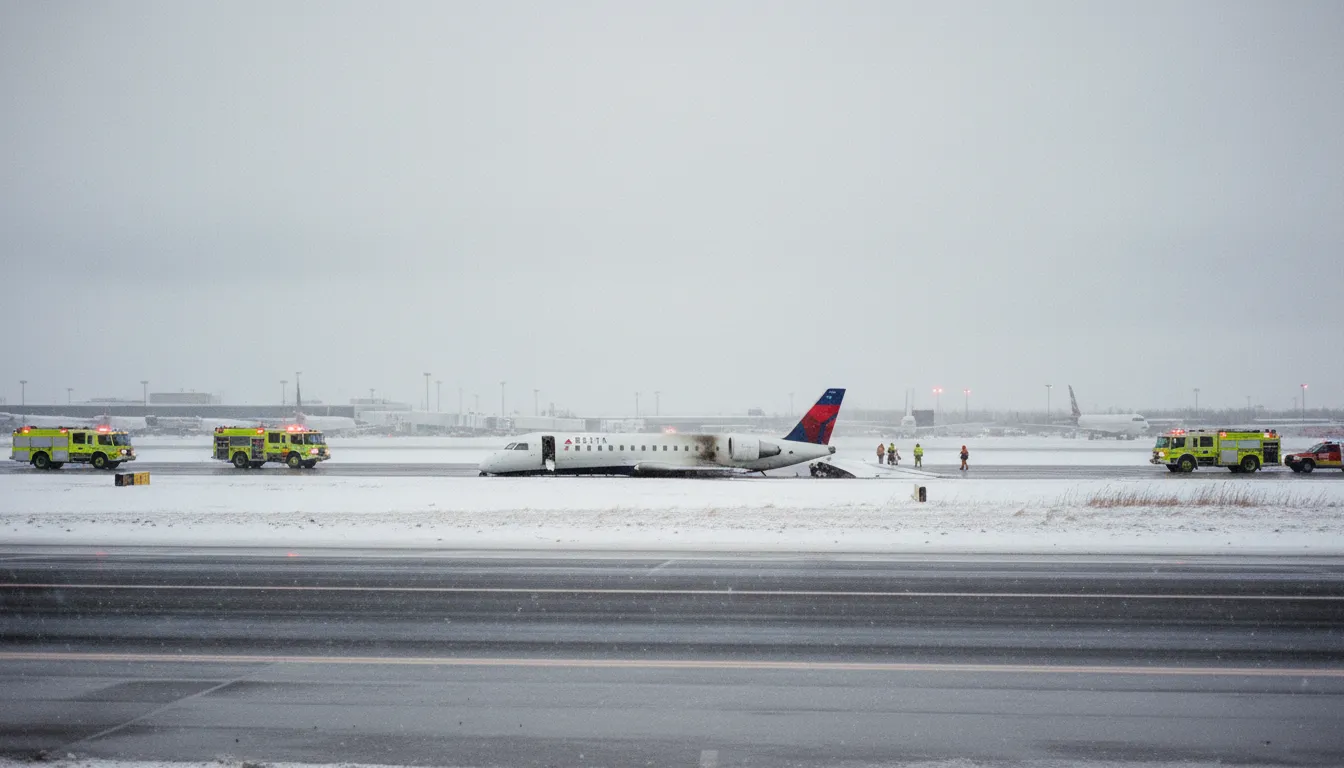
On February 17, 2025, at around 2:15 PM EST, Delta Connection Flight 4819 (operated by Endeavor Air) crashed while landing at Toronto Pearson International Airport (YYZ). The Bombardier CRJ-900LR aircraft was arriving from Minneapolis–St. Paul with 80 people on board (76 passengers and 4 crew members).
During a severe winter storm with wind gusts up to 40 mph, the plane hit Runway 23 exceptionally hard. The right landing gear broke, causing the right wing to detach and catch fire. The plane flipped completely upside down and slid off the runway. Miraculously, all 80 people survived the crash.
The Final Seconds Before Impact
High Descent Rate: The plane descended 50% faster than the landing gear could handle, triggering a cockpit warning alarm less than 3 seconds before touchdown.
Wind Gust Reaction: At 153 feet in the air, the plane hit a strong wind gust, and the first officer reduced engine power.
Sudden Drop: The wind gust vanished 4 seconds before touchdown, causing the airspeed to drop rapidly.
No Correction: The pilots did not increase power or adjust the plane’s nose angle to fix the sudden loss of speed.
Wing and Fuel Fire: The hard impact broke the right landing gear, tearing the wing off and leaking 6,000 pounds of jet fuel, which caused an immediate explosion.
Inverted Slide: The plane flipped upside down and slid off the right side of Runway 23, while the pilots had to escape through a ceiling hatch because the cockpit door jammed.
The Evacuation and Emergency Response
Immediate Escape: All 80 passengers and crew successfully evacuated the burning, upside-down aircraft.
Injuries: No one died, but 21 people were hospitalized, including two with serious injuries and one child.
Cabin Chaos: Passengers hung upside down from their seatbelts in the dark while luggage fell around them, causing injuries during the rush to exit.
Harsh Weather: Survivors escaped the burning plane directly into a freezing February snowstorm without their winter coats.
Airport Closure: Pearson Airport immediately suspended operations and closed two primary runways for several days for the Transportation Safety Board (TSB) investigation.
What Did Investigators Find? The Official TSB Report
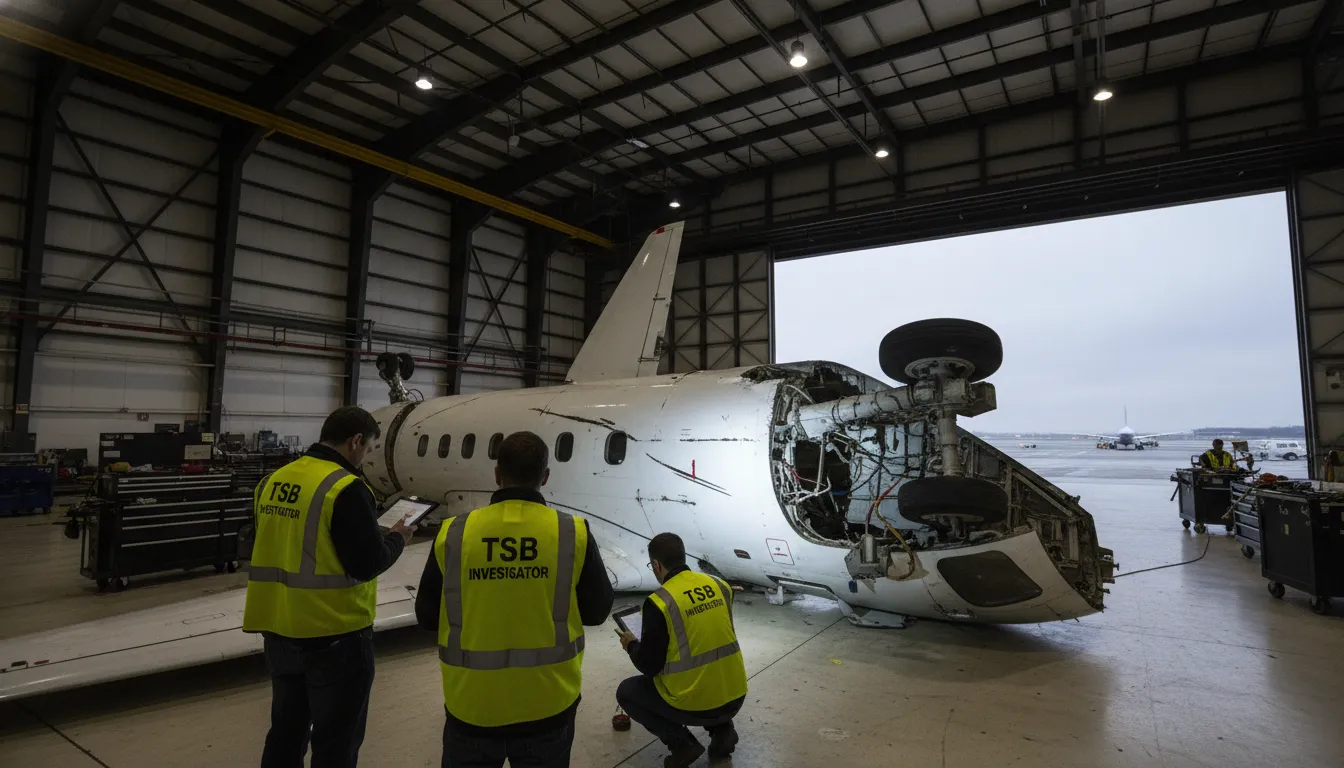
Within 30 minutes of the crash, the Transportation Safety Board of Canada (TSB) deployed investigators to Pearson. The TSB launched official investigation A25O0021, coordinating closely with the U.S. NTSB, the FAA, and Transport Canada. On March 20, 2025, the TSB released its preliminary report. Here is what investigators found, explained clearly without complex technical jargon.
The Landing Gear Failure Sequence
When the aircraft hit the runway, a critical support piece called the outboard side-stay fractured immediately. This structural break forced the right landing gear to collapse, which caused the right wing to snap off from the fuselage and tear open the fuel tanks. The loss of the wing destabilized the regional jet, forcing it to tip violently to the right and flip completely upside down.
Metallurgical Testing: Experts are examining the broken landing gear and wing metal to check for pre-existing cracks or material defects.
Black Box Analysis: Teams are reviewing all data from the Flight Data Recorder (FDR) and Cockpit Voice Recorder (CVR) to map out the plane’s exact movements.
Flight Simulator Recreation: Investigators are running simulator exercises at the Endeavor Air facility to test how the aircraft responds to sudden power reductions during high winds.
Weather Tracking: The board is analyzing all meteorological reports and wind shear alerts issued to the crew before and during the approach.
Pilot Experience Review: Records show the first officer had 1,422 total flight hours, including 419 hours specifically on this Bombardier CRJ aircraft type.
What the TSB Has NOT Yet Concluded
Canada’s TSB operates with the sole mandate of improving aviation safety, meaning the agency does not assign legal blame or financial liability. As of June 2026, the final report on the plane crash Pearson airport experienced has not been released, and the official cause remains undetermined. Investigators emphasize that it is too early to blame pilot error, weather, or mechanical failure exclusively.
Final Report Status: The final investigation report has not yet been published as of mid-2026.
Official Cause: The definitive cause of the crash remains legally and technically undetermined.
Current Phase: The TSB confirms the investigation is still in the detailed examination and data analysis phase.
Aviation Policy: Investigators state it is too early to draw conclusions regarding fault or airline procedural changes.
International Cooperation: The TSB continues to share factual findings with American safety authorities and regulatory bodies.
I Was Sure That Was Going to Be My Day" — Survivors One Year Later
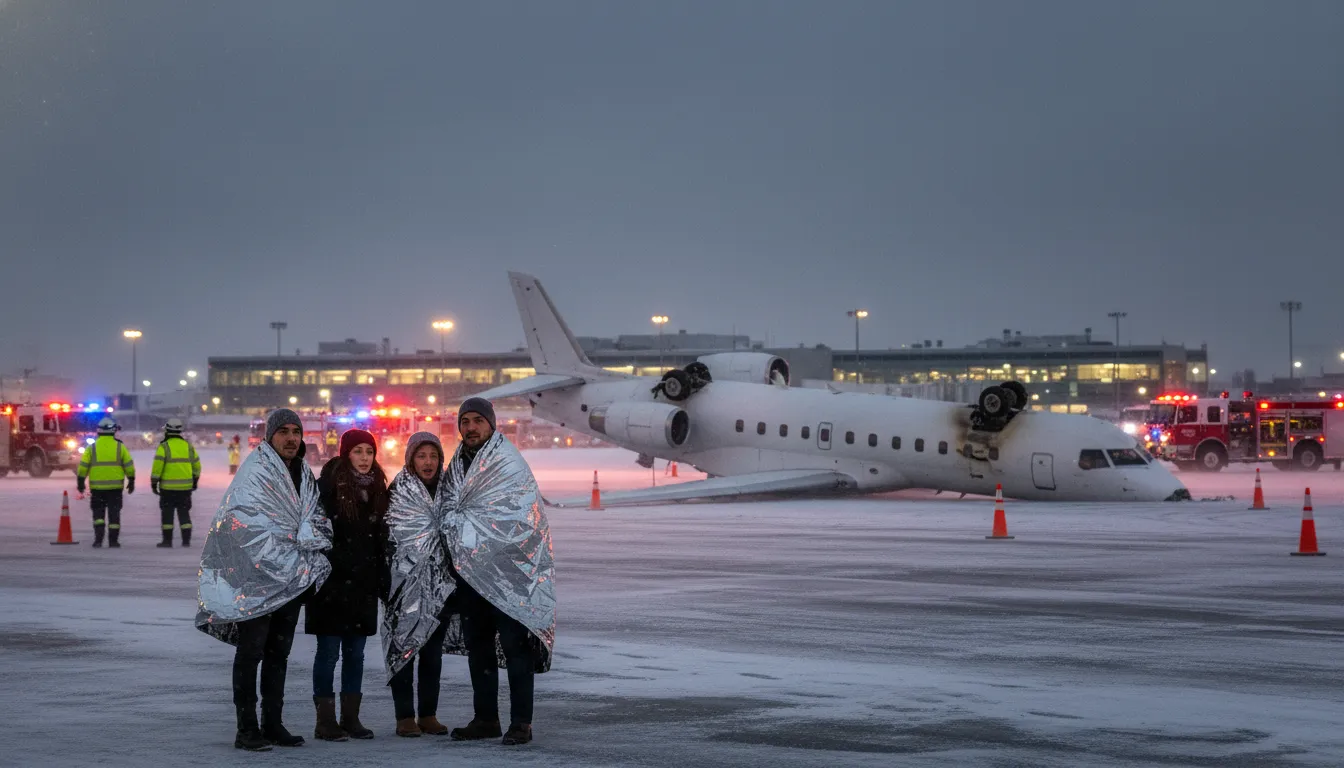
The official numbers—21 hospitalized, 2 serious injuries, 0 fatalities—tell only part of the story. For the 80 people on Flight 4819, the crash did not end when they walked off the runway. The real impact involves physical injuries, psychological trauma, and shattered lives that continue to this day. These real human experiences reveal the true cost of the plane crash Pearson airport witnessed that afternoon.
The Physical Injuries — What Passengers Are Still Living With
The physical injuries extended far beyond the initial emergency room visits. Ironman triathlete John Nelson suffered a torn retina, a permanent eye floater, and severe neck and disk injuries that ended his athletic career. Another passenger, Nate Richie, suffered a traumatic brain injury, chronic back pain, and memory loss. One hero passenger stayed at the exit door to help others escape, surviving a direct hit from a firefighter’s water cannon, neck injuries, and chemical burns from jet fuel.
Vision Loss: John Nelson suffered a torn retina and permanent eye damage.
Brain Trauma: Nate Richie was diagnosed with a traumatic brain injury (TBI) and ongoing memory loss.
Spinal Damage: Multiple passengers sustained chronic neck and disk injuries that limit mobility.
Chemical Burns: Jet fuel exposure at the exit doors caused severe burns to passengers’ faces and shoulders.
Chronic Pain: Survivors experience constant back pain that prevents them from walking long distances.
The Psychological Toll — PTSD, Flight Phobia & Trauma
The psychological aftermath has been just as damaging as the physical injuries. Multiple passengers developed severe Post-Traumatic Stress Disorder (PTSD), clinical depression, and debilitating anxiety. Nate Richie recalled being certain he was going to die as the plane flipped upside down. The trauma also extended to the airport staff; the air traffic controller on duty stated that witnessing the fiery crash deeply impacted the tower team.
PTSD Diagnoses: Multiple survivors are in ongoing therapy for Post-Traumatic Stress Disorder.
Severe Flight Phobia: At least one passenger completely refuses to ever board an airplane again.
Severe Anxiety: Survivors experience panic attacks and sweat simply from seeing planes fly overhead.
Sleep Disruptions: Passengers require ongoing medication for chronic nightmares and sleep disorders.
Witness Trauma: Air traffic controllers required psychological support after witnessing the runway fireball.
The Compensation Controversy — Was $30,000 Enough?
In the days following the accident, Delta Airlines offered each passenger a one-time payment of US $30,000. While Delta stated this money came with “no strings attached”—allowing passengers to accept the cash and still sue—many survivors felt the amount was insulting. The initial payout failed to cover long-term medical bills, lost income from missed work, and the cost of years of specialized trauma therapy.
Initial Offer: Delta offered US $30,000 per passenger as immediate assistance.
Right to Sue: Passengers retained the legal right to accept the money and still file lawsuits.
Legal Action: Over 16 lawsuits have been filed in U.S. courts by passengers seeking proper damages.
Consolidated Case: Attorney Erin Applebaum represents 14 passengers in a consolidated federal lawsuit in Minnesota.
Current Status: Legal proceedings are in a holding pattern until the TSB releases its final investigation report.
The Legal Aftermath — Lawsuits and Airline Responses
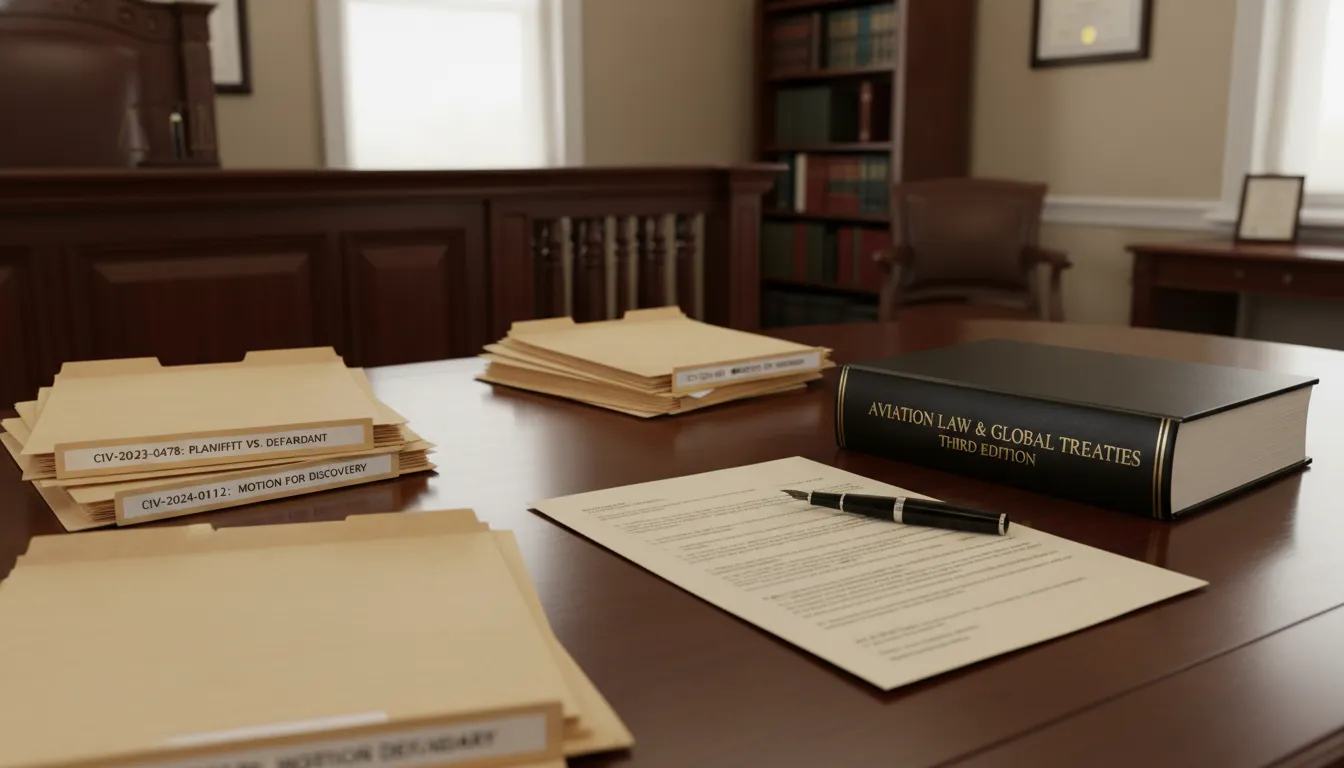
Within weeks of the crash, lawsuits began to pile up against Delta Airlines and its subsidiary, Endeavor Air. A group of injured passengers filed formal legal actions in U.S. courts, which have since been consolidated into a multidistrict litigation in a Minnesota federal district court. The core allegation from the victims’ attorneys states that the accident was entirely preventable and occurred because the pilots landed the aircraft at an unsafe speed and descent rate.
Delta’s Legal Position — Deflecting Blame
In official court filings, Delta Airlines denied being entirely at fault for the crash and the resulting passenger injuries. The airline publicly stated it remains fully engaged with federal investigators and has declined further public comment to respect the integrity of the ongoing investigation. The legal battle is currently in a holding pattern, as attorneys on both sides must await the TSB’s final accident report before making definitive liability arguments.
Lawsuit Consolidation: Multiple passenger lawsuits have been combined into a centralized multidistrict litigation case in a Minnesota federal court.
Plaintiff Claims: Attorneys allege that pilot negligence and an unstable landing approach directly caused severe, permanent injuries to the passengers.
Defense Stance: Delta denies sole legal liability, choosing instead to defer to the federal aviation investigation records.
Mediation Efforts: The court ordered mediation sessions, with Delta requesting targeted discussions for specific passenger cases.
Investigation Dependence: Legal teams cannot finalize causation or financial liability arguments until the TSB issues its final public conclusions.
The Misinformation Problem — False Claims That Spread Online
In the chaotic days following the accident, false claims and internet rumors spread rapidly across social media platforms. The most prominent baseless rumor claimed that an all-female flight crew caused the aircraft to flip on the runway. Federal records completely disprove this, confirming the crash involved a complex chain of high descent rates, severe wind shear, and structural failures that are still under investigation.
Crew Rumors Debunked: Public flight records prove the social media claims regarding an all-female crew are entirely fabricated.
Weather Realities: While severe winter weather was present, investigators confirm wind alone did not cause the crash sequence.
Key Factors Identified: The TSB verified that a high rate of descent and an instant landing gear fracture are the core technical facts.
Cockpit Warnings: Data logs confirm an automated “sink rate” warning alarm sounded in the cockpit less than 3 seconds before impact.
Unfinished Investigation: As of mid-2026, the TSB states it is still too early to assign exclusive blame to a single cause or error.
Is Toronto Pearson Airport Safe? What Has Changed Since the Crash
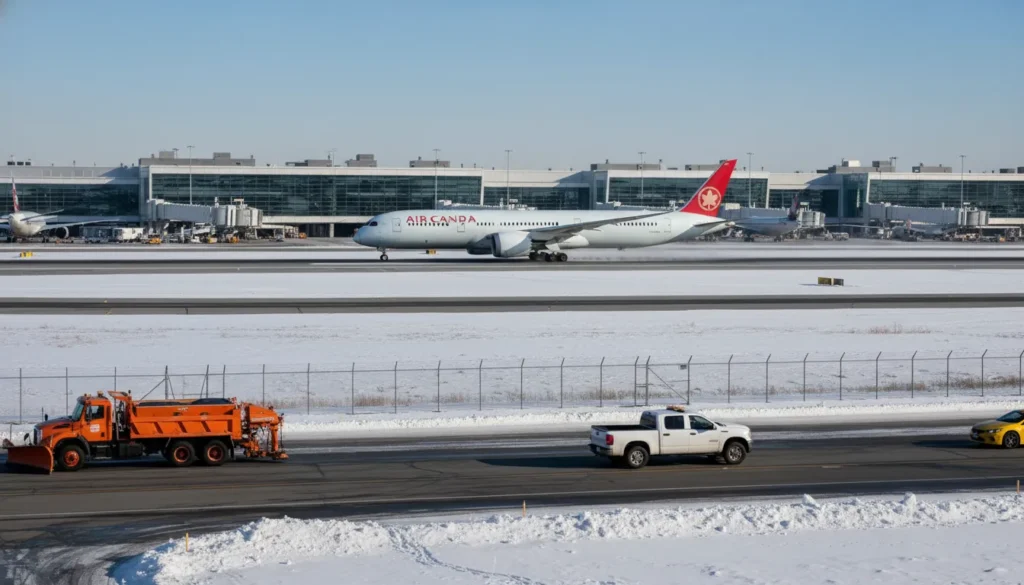
One of the most common questions travelers now ask is simple but important: Is it still safe to fly through Toronto Pearson International Airport? The short answer is yes—Pearson remains one of Canada’s busiest and most operationally capable airports. But the longer answer involves understanding what has changed since February 17, 2025, what the airport authority has done in response, and what ongoing safety reviews mean for passengers.
What Happened to the Runway
The crash on Runway 23 caused the immediate closure of two of Pearson’s runways while investigators examined the wreckage. Ground operations safely diverted incoming traffic to other active runways within hours of the incident. The wrecked aircraft was eventually removed from the airfield, allowing maintenance crews to fully restore the pavement to active service. The Greater Toronto Airports Authority (GTAA) coordinated with TSB investigators throughout the recovery and cooperated fully with the investigation.
Full Restoration: All Pearson runways were returned to active duty shortly after the crash scene was cleared and repaired.
Terminal Operations: Both Terminal 1 and Terminal 3 continue to handle normal passenger processing without any disruptions.
Federal Cooperation: The GTAA maintains open, continuous cooperation with the Transportation Safety Board of Canada.
Emergency Response Performance: First responders received widespread industry praise for their rapid and effective evacuation of all 80 occupants.
Continuous Operations: Pearson continues to securely process tens of millions of global passengers every single year.
Investigation Status: The ongoing safety inquiry does not restrict or impact day-to-day airport flight paths or airline schedules.
Regulatory Oversight: Transport Canada is actively monitoring all safety observations originating from the TSB review process.
What Has NOT Changed — And Why Travelers Should Not Panic
It is important for travelers to understand that the Pearson crash was a single aircraft incident related to a specific combination of approach speed, weather conditions, and potential mechanical factors. It was not a systemic failure of Pearson Airport itself, its runways, its air traffic control, or its safety systems. Pearson’s emergency response teams—which successfully evacuated all 80 people from a burning, upside-down plane—performed exceptionally. No changes to general airport operations are required as a result of this investigation.
Protecting Your Pearson Airport Journey — Ground Transportation Tips Smart Travelers Follow

When major incidents happen at airports, the chaos does not stay in the terminal. The Pearson crash immediately halted all departures and arrivals, leaving thousands of passengers stranded and scrambling for ground transportation. Ride-sharing apps surged in price, taxis disappeared, and travelers without pre-arranged transportation were left waiting in the cold. This is a pattern that repeats every time a significant airport disruption occurs, but it is entirely preventable with the right preparation.
What Happened on the Ground on February 17, 2025
When Pearson’s operations were suspended within minutes of the crash, the ripple effects on ground transportation were immediate. Surge pricing on rideshare apps spiked, and airport taxi queues backed up for hours. Travelers who had no backup plan found themselves stranded for hours in the middle of a severe February snowstorm. The lesson was clear: airport disruptions punish unprepared travelers hardest at the curb, not the gate.
Instant Surge Pricing: On-demand rideshare apps automatically increased rates as thousands of stranded passengers opened their apps simultaneously.
Taxi Shortages: Traditional walk-in taxi queues became completely depleted within minutes of the airport operations halt.
Reliability of Pre-Booking: Pre-booked transportation services maintained their commitments to existing clients despite the unfolding crisis.
Proactive Communication: Travelers with pre-arranged pickups were contacted directly by their providers to rearrange meeting times and locations.
Extended Wait Times: Passengers without reservations faced two to four-hour wait times in freezing outdoor conditions.
Automated Adjustments: Services with integrated flight tracking software automatically adjusted their schedules to account for diversion-related delays.
How Pre-Booked Limo Service Protects Your Journey During Airport Chaos
The most practical lesson from the Pearson crash disruption is one that applies to every airport journey: never rely solely on on-demand ground transportation during an emergency. A pre-booked professional chauffeur service does not cancel, does not surge-price, and does not disappear when demand spikes. VIP Airport Limo tracks your flight in real time, adjusts automatically to delays, and guarantees your driver is there—whether the disruption is a snowstorm or a runway incident.
Fixed Flat Rates: Pre-booked services charge a predictable flat rate, ensuring you face no unexpected surge pricing regardless of weather or airport conditions.
Real-Time Flight Tracking: System tracking allows your chauffeur to monitor flight changes automatically and adjust arrival times without requiring you to call.
Guaranteed Pre-Assignment: Your chauffeur is assigned and confirmed well ahead of schedule, protecting you against sudden vehicle shortages.
Designated Pickup Areas: Fully compliant protocols ensure smooth pickups at designated airport areas, including Terminal 1 (Door A) and Terminal 3 (Door G).
Zero Percent Cancellation: A confirmed reservation guarantees your vehicle will show up, even when thousands of other travelers are actively searching for rides.
Direct Chauffeur Contact: Passengers receive direct contact information for their driver before landing, allowing for seamless coordination at the curb.
Full Luggage Assistance: Professional drivers handle all heavy luggage loading, reducing stress during a chaotic airport exit.
Complete Timeline: Pearson Airport Plane Crash — February 2025 to June 2026
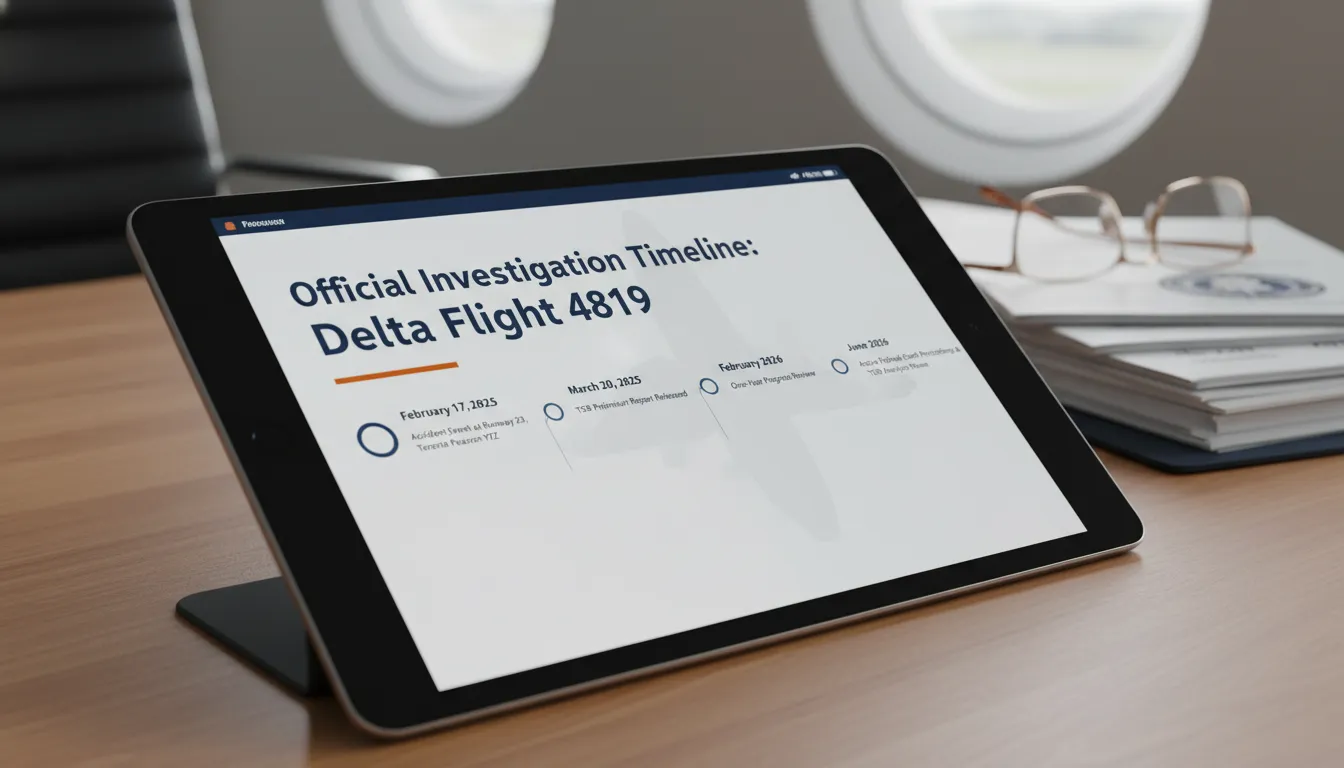
Here is every major development in the Pearson Airport crash story, from the moment of impact to the latest legal and investigation updates.
2025 Timeline
The initial months following the accident involved emergency rescue operations, rapid federal safety deployments, and the first major legal developments from the airline.
February 17, 2025 (2:15 PM EST): Delta Connection Flight 4819 crashes during a winter storm on Runway 23, tearing off its right wing and flipping completely upside down.
February 17, 2025 (5:00 PM EST): Pearson Airport officials partially resume flight operations after a total ground suspension that stranded thousands of travelers.
February 18, 2025: The Greater Toronto Airports Authority confirms all 80 occupants survived, while the TSB safely secures the crash site to preserve the physical wreckage.
Late February 2025: Delta Airlines issues an immediate, unconditional offer of US $30,000 to each passenger for emergency expenses while preserving their right to sue.
March 20, 2025: The TSB releases preliminary report A25O0021, revealing the 50 percent excessive descent rate and the structural fracture of the landing gear.
Spring 2025: Injured passengers retain legal counsel and file formal civil lawsuits against the airline in multiple United States district courts.
Summer 2025: The U.S. judicial system officially consolidates more than 16 individual passenger lawsuits into a single multidistrict litigation case in Minnesota.
2026 Updates
Recent milestones focus on long-term medical recovery, ongoing federal analysis, and complex pretrial maneuvering in the federal court system.
February 17, 2026: On the one-year anniversary of the accident, survivors publicly document their ongoing battles with severe physical injuries and chronic PTSD.
February 2026: Federal investigators confirm the accident probe remains active, stating that detailed simulator testing and metallurgical analysis are still underway.
June 3, 2026: Delta Airlines enters formal court filings denying exclusive liability for the crash, prompting the presiding judge to order targeted mediation sessions.
June 2026 Onward: The aviation community awaits the publication of the final TSB report, which will outline official safety recommendations for regional jet operations.
Future Legal Resolution: Court records indicate that final arguments regarding financial damages and liability remain paused until federal authorities release their definitive technical findings.
Frequently Asked Questions About the Pearson Airport Plane Crash
The crash occurred on February 17, 2025, at approximately 2:13 PM EST. Delta Connection Flight 4819 hard-landed, suffered a landing gear collapse, and flipped completely upside down on Runway 23 at Toronto Pearson International Airport during a severe winter storm.
The aircraft involved was a Bombardier CRJ-900LR regional jet, registration number N932XJ. The flight was operated by Endeavor Air (a wholly-owned subsidiary of Delta Air Lines) flying from Minneapolis–St. Paul to Toronto
There were 80 people on board, including 76 passengers and 4 crew members. Miraculously, all 80 individuals survived the impact and evacuated the overturned fuselage, with 21 people transported to hospitals for injuries.
Preliminary findings from Canada's Transportation Safety Board (TSB) show the plane hit the runway at a descent rate of 1,100 feet per minute—well above the landing gear's maximum design limit of 720 feet per minute. This high descent rate caused a critical landing gear component to fracture, leading to a structural collapse, wing separation, fuel fire, and the plane flipping over.
Yes. Toronto Pearson International Airport is fully operational and safe to fly through. The crash was an isolated operational incident involving a single aircraft and unique weather variables, not a systemic failure of the airport's infrastructure or air traffic safety networks.
RELATED READS
You Might Also Find This Useful
Explore Airport Topics
Our Services
Featured Travel Guides
Toronto Pearson Airport Arrivals Guide
Pearson Airport to Kitchener-Waterloo Travel Guide
Hamilton Airport to Pearson Transportation
Billy Bishop Airport Limo Cost
How to Arrange Executive Airport Transfers for International Delegations
Corporate Duty of Care for Business Travel Toronto
View All Travel Guides →Industry & Safety Standards
Our Service Guarantee
Every guide is written from real chauffeur and dispatch experience — flat-rate pricing, licensed vehicles and 24/7 flight-monitored pickups across Toronto & the GTA.
24/7 Quick Response
+1 (647) 654-4915