How to Arrange Executive Airport Transfers for International Delegations
To arrange executive airport transfers for an international delegation, partner with a protocol-trained chauffeur service at least 48 to 72 hours in advance. Provide exact flight itineraries, passenger headcounts, and luggage requirements. Secure terminal-specific meet-and-greet services for seamless arrivals, and select a cohesive fleet—such as executive sedans, SUVs, or Sprinter vans—matched precisely to your group’s size, schedule, and security requirements.
Table of Contents
Step 1: Confirm Delegation Size & Structure
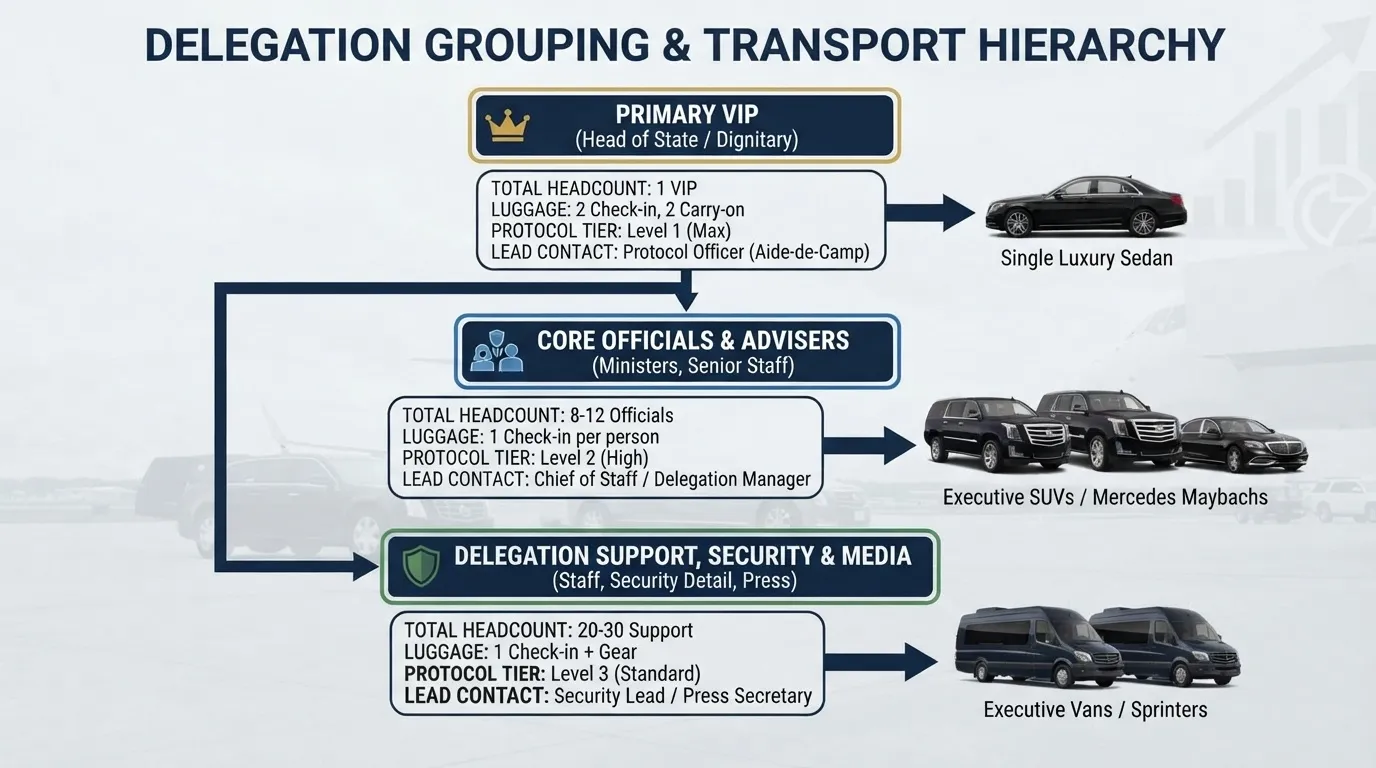
Before reaching out to a ground transportation provider, establish the exact headcount and breakdown of your group. Coordinating ground logistics for two C-suite executives requires a completely different approach than moving an eight-person government envoy traveling with security personnel, administrative staff, and heavy luggage.
To build an accurate transportation plan, break down your delegation structure across these key categories:
VVIPs / Senior Principals: Key dignitaries, ambassadors, or C-level executives who require dedicated executive sedans or luxury SUVs with zero shared seating.
Support Staff & Advisors: Technical leads, aides-de-camp, or administrative staff who can comfortably travel together in an executive van or sprinter.
Security Detail: Armed or close-protection officers who must ride alongside the principal or maintain strict position in a trailing chase vehicle.
Luggage Count & Equipment: International delegations often carry double the standard luggage capacity, along with secure briefcases or presentation gear, which directly impacts cargo space requirements.
Determining these numbers upfront establishes whether your operation requires a single point-to-point transfer or a complex multi-vehicle fleet deployment with active staging coordination.
Step 2: Share Flight & Itinerary Details in Advance
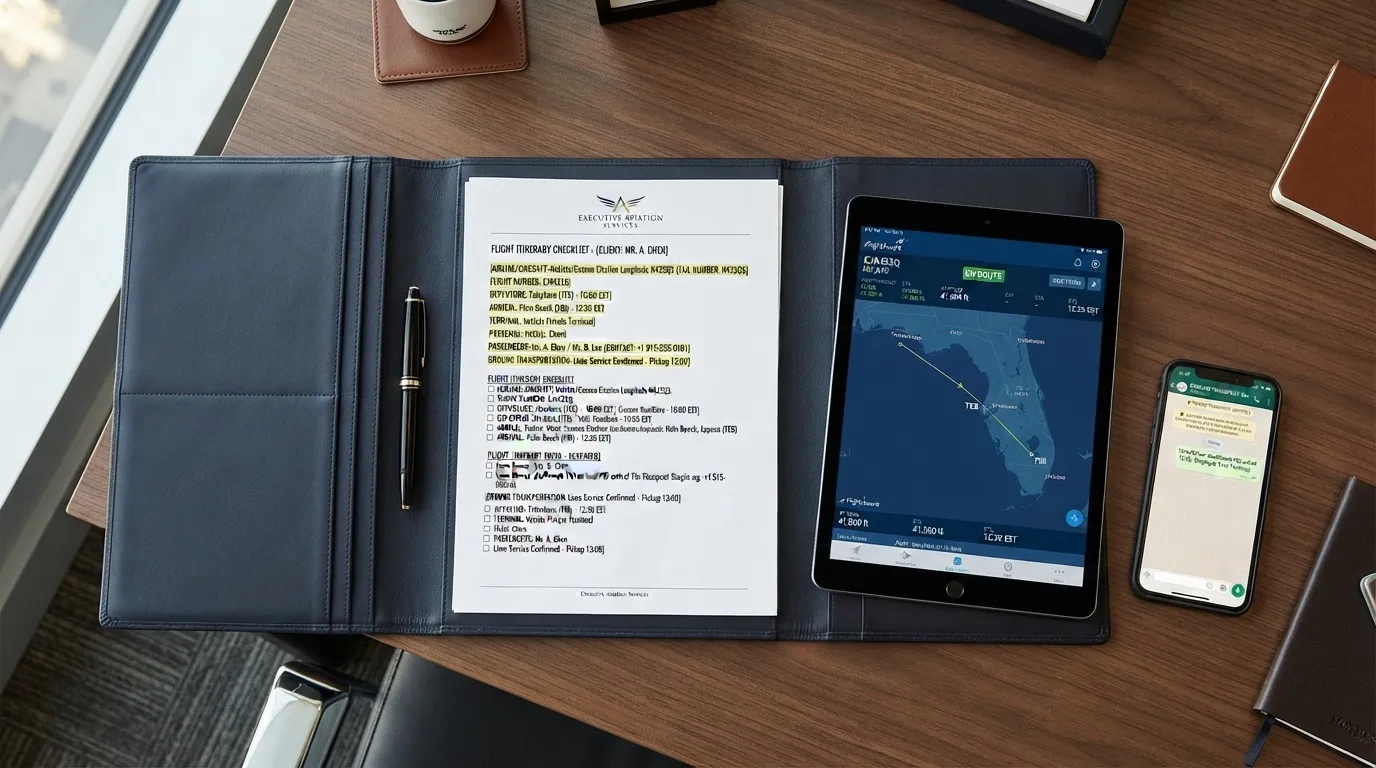
International delegation logistics break down when ground operators lack full context. To prevent missed connections and curbside confusion, provide your transport provider with a comprehensive itinerary at least 48 to 72 hours before the first scheduled arrival. For complex, multi-vehicle delegations, finalize details 5 to 7 business days out to guarantee fleet availability.
Ensure your master manifest includes the following mandatory datapoints for every incoming passenger:
Commercial Flight Numbers & Carriers: Include foreign carrier codes and codeshare details so dispatchers can track actual radar data, not just published schedules.
Staggered Arrival Schedules: Group delegates by flight numbers and estimate customs processing times—allow 45 minutes for standard international arrivals and up to 90 minutes for diplomatic or high-security clearances.
Staging & Destination Addresses: Provide exact drop-off points, including designated hotel loading zones, consulate security gates, or venue staging areas.
Secondary Contacts: Include direct mobile numbers for on-ground staff traveling with the delegation, not just the primary coordinator back at head office.
If flight delays occur, experienced dispatch teams monitor tail numbers directly through live flight-tracking software to adjust chauffeur staging times automatically.
Step 3: Arrange Meet & Greet / Terminal Access
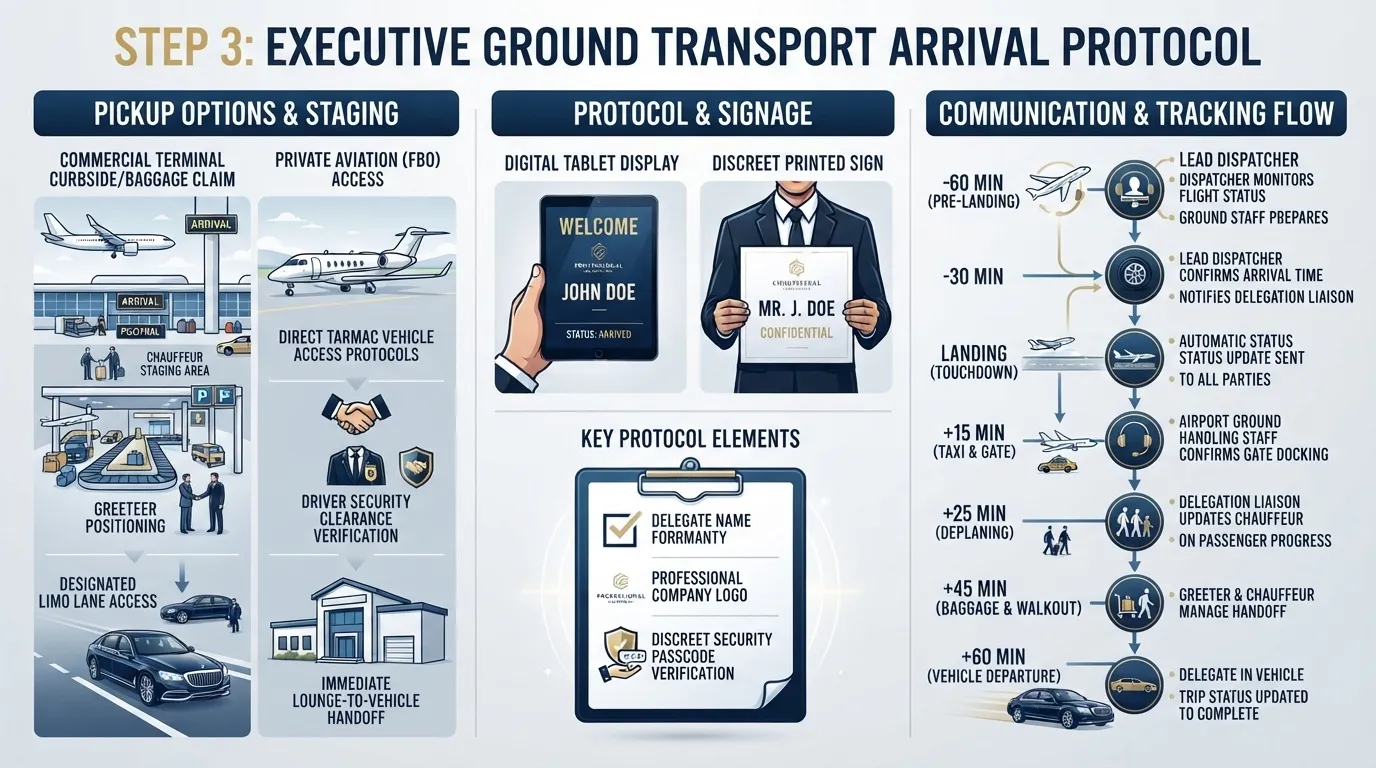
Navigating commercial terminals or private FBOs with a high-profile group requires precise coordination before the aircraft touches down. Clear protocols differ significantly based on whether the delegation arrives on a commercial airliner or via private aviation.
Commercial Terminal Logistics
At major hubs like Toronto Pearson (YYZ), commercial arrivals route through specific terminals—typically Terminal 1 or Terminal 3.
Inside Meeting Points: Chauffeurs access the arrival hall inside the terminal, standing just past the international customs exit line with a physical or digital display sign displaying the delegation name, lead official, or corporate emblem.
Luggage Assistance: The chauffeur takes immediate possession of baggage and escorts the group directly to the adjacent professional transportation staging area, avoiding public taxi queues.
Curbside Pickup Protocols: Where local airport authority regulations restrict extended idling at the curb, chauffeurs hold in designated airport cell phone lots until the group completes customs and confirms they are moving toward the exit door.
Private Aviation (FBO) Clearances
When a delegation arrives via charter or private aircraft, ground transport bypasses the main passenger terminals entirely.
Vehicles stage directly at the Fixed-Base Operator (FBO) tarmac or private arrival lounge.
Depending on local airport security credentials and pre-cleared diplomatic status, vehicles may receive tarmac access permits to pull directly alongside the aircraft stairs.
Dispatch coordinates arrival times directly with the FBO desk, ensuring immediate passenger transfer from aircraft to vehicle without public exposure.
Step 4: Match Vehicle Type to Delegation Size
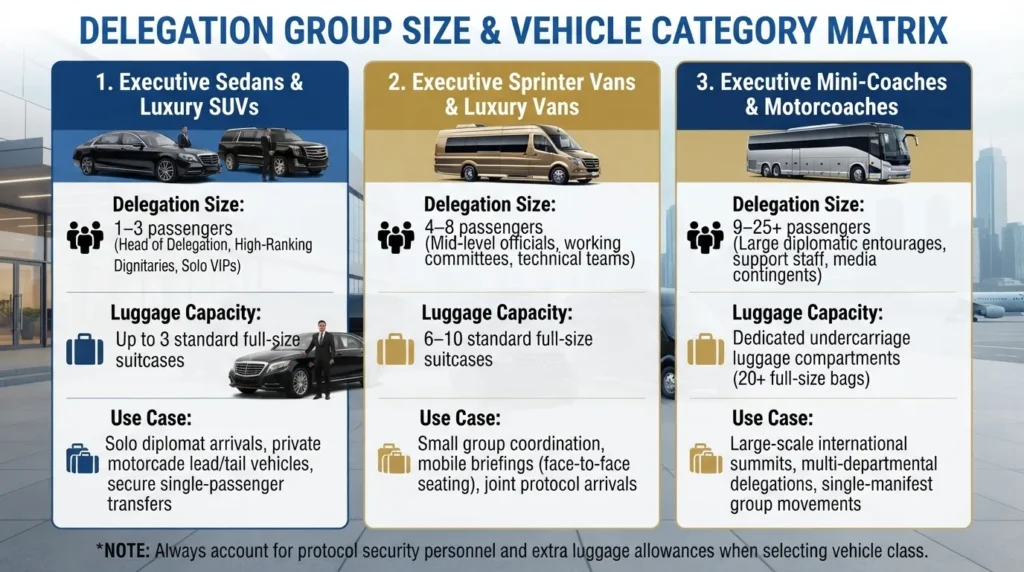
Selecting vehicles for an international delegation requires planning for passenger count, luggage volume, and security personnel simultaneously. Choosing based on seating capacity alone often leads to last-minute vehicle upgrades when luggage or support staff exceed available cabin space.
1 to 3 Passengers (Solo Executives or VIPs + Aide): Full-size executive sedans (such as a Mercedes-Benz S-Class or BMW 7 Series) work well for individual VIPs who do not require trailing security. For an executive traveling with a personal assistant or security detail plus multiple hard-shell international bags, an executive SUV (like a Cadillac Escalade or Lincoln Navigator) provides necessary cargo capacity while maintaining privacy and cabin comfort.
4 to 6 Passengers (Small Diplomatic or Trade Teams): A single executive SUV accommodates small teams with moderate luggage. However, if the delegation includes dedicated security officers, split the group into two vehicles: a lead executive SUV and a secondary vehicle for support staff and excess baggage.
7 to 14 Passengers (Full Delegations & Technical Envoys): Executive Sprinter vans configured with captain’s chairs, onboard Wi-Fi, and extended rear cargo holds are the industry standard for full delegations. They allow the entire team to travel together, facilitating onboard briefings while keeping all baggage inside a single secure perimeter.
15+ Passengers (Large Summits or Trade Missions): Deploy a fleet mix rather than a single mini-bus. Mini-buses lack the maneuverability, privacy, and protocol status required for high-level arrivals. A combination of executive SUVs for principal delegates and Sprinter vans for supporting staff maintains appropriate hierarchy and simplifies terminal loading.
Always calculate luggage capacity using a 2:1 ratio for international flights—assume two large checked bags plus one carry-on per delegation member. If local close-protection officers or diplomatic security details are joining the motorcade, account for their physical seating in the primary passenger cabin to avoid displacing delegates.
Step 5: Coordinate Multi-Vehicle & Staggered Logistics
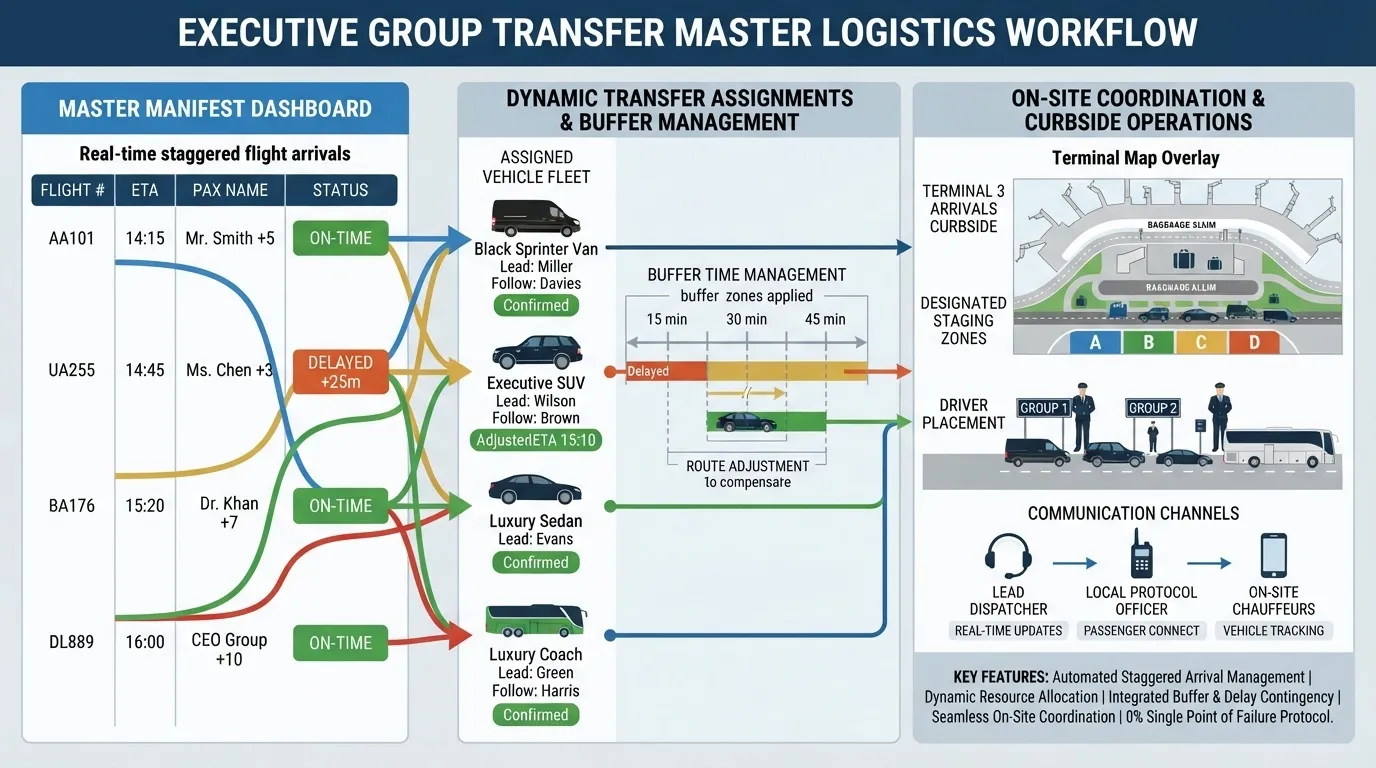
Managing delegations arriving on different flights requires a centralized logistical plan. When arrivals are spaced across multiple terminals or hours, sending separate vehicles for each arrival creates unnecessary costs and traffic bottlenecks at the destination venue.
Synced Arrival Windows
Establish a strict arrival buffer—typically 40 to 60 minutes—to group delegates landing on different flights. Passengers arriving within this window are assigned to a shared staging area inside the terminal (such as an airline lounge or designated airport meet-and-greet zone) rather than dispatched immediately. The primary transport vehicle holds until the final delegate clears customs, allowing the group to arrive at the venue or hotel as a single unit.
Managing Flight Delays and Reroutes
Flight delays are common with long-haul international travel. To prevent cascading delays across your ground fleet:
Assign dedicated tail-number tracking to every chauffeur or dispatch coordinator rather than relying on scheduled arrival times.
Establish a “cut-off threshold” in advance (e.g., a 45-minute flight delay). If a delegate’s flight exceeds this delay, dispatch the waiting fleet with the landed group and auto-assign a backup “sweeper” vehicle for the delayed traveler.
Venue Arrival Alignment
At the destination hotel or summit venue, multiple luxury vehicles arriving simultaneously cause severe driveway congestion. Work with the transport provider to stage secondary vehicles off-site (at a nearby staging lot) and release them to the venue entrance in 3- to 5-minute staggered intervals. This allows security personnel and hotel staff to process each vehicle, offload luggage, and clear the driveway without creating a public bottleneck.
The Role of On-Site Dispatch Coordination
For transfers involving three or more vehicles, rely on an active on-site dispatcher stationed at the airport terminal rather than individual chauffeurs managing their own timing. The dispatcher communicates directly with flight tracking systems, coordinates with local airport authority traffic control, monitors customs clearance times, and instructs individual drivers when to move from the staging cell to the terminal curb.
Step 6: Confirm Protocol, Security & Confidentiality Needs
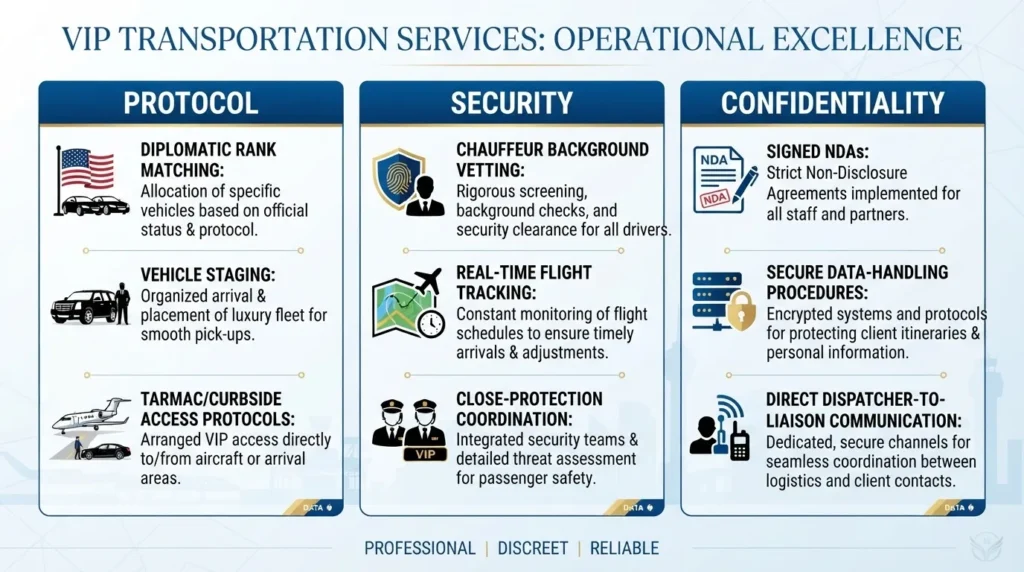
International delegations bring unique diplomatic, corporate, and security requirements that go well beyond a standard airport pickup. Clarifying these expectations during the booking stage ensures the transport operation runs without friction or security compromises.
Confidentiality and NDA Agreements
Diplomatic personnel, trade envoys, and C-suite executives often discuss sensitive policy or corporate matters during transit.
Confirm that the transport provider enforces non-disclosure agreements (NDAs) across their driving and operations personnel.
Request non-recording policies inside the cabin, ensuring onboard dashcams or passenger-facing cameras are deactivated or angled away from passenger seating areas.
Driver Vetting and Security Clearances
Depending on the profile of the delegation, standard chauffeur licensing may not be sufficient.
Ask if drivers have undergone background checks, advanced defensive driving instruction, or specific close-protection training.
For high-profile diplomatic arrivals, coordinate with the provider to establish whether drivers require specific clearance to enter secure airport tarmac areas or restricted motorcade zones.
Diplomatic Protocol and Decorum
Formal delegations expect strict adherence to protocol.
Specify greeting etiquette, dress code requirements (e.g., dark formal suit), and language preferences for front-line chauffeurs.
Clarify flag-mounting or emblem placement rules on the lead vehicles if hosting foreign dignitaries or official government reps.
Step 7: Set Up Billing for Recurring or Official Travel
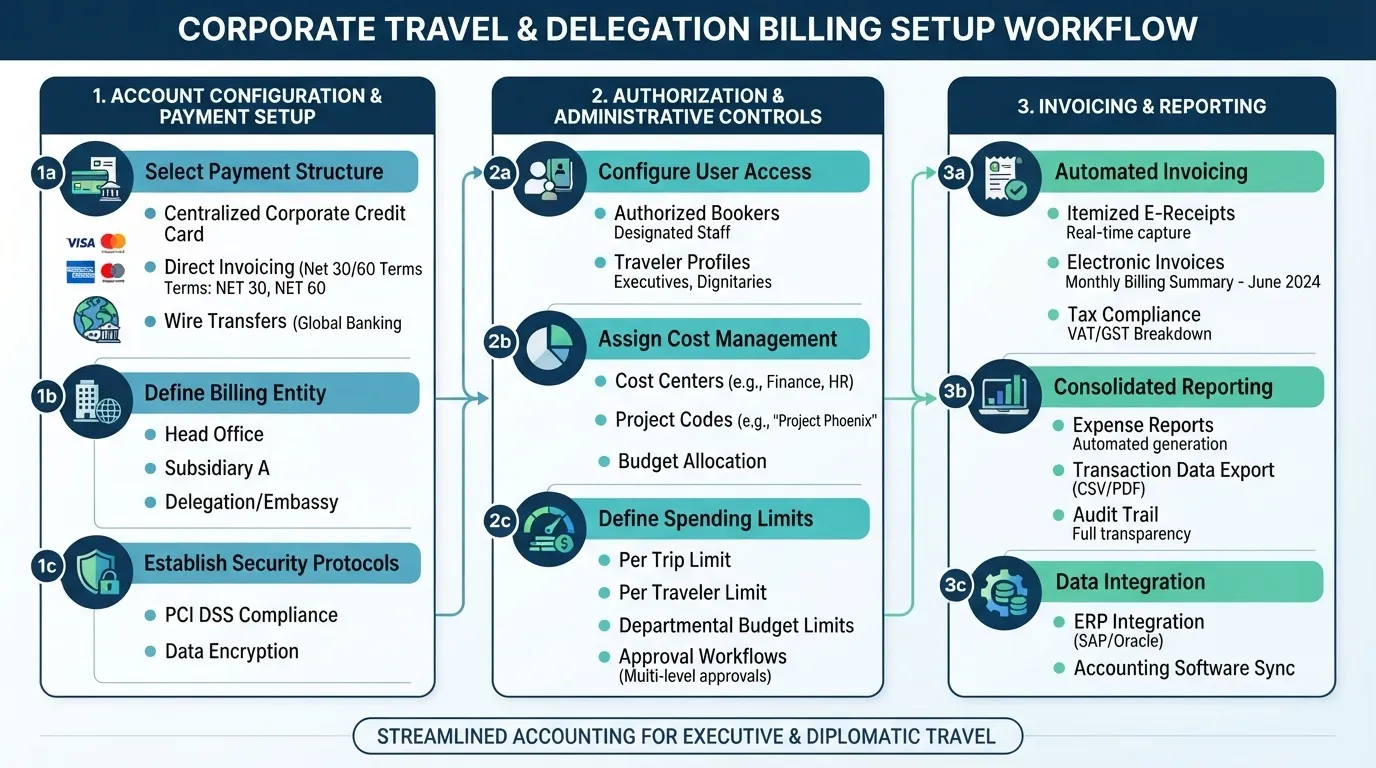
Managing individual payments for multi-vehicle fleets or staggered arrivals creates unnecessary administrative friction. Establishing a corporate account or consolidated billing structure simplifies tracking and keeps logistics focused on the ground operation.
Consolidated Corporate Accounts
Setting up a centralized billing account with your transportation partner streamlines the financial workflow for complex delegation itineraries.
All vehicle charges, parking fees, highway tolls, and gratuities are consolidated into a single itemized invoice linked to a master purchase order or department code.
Eliminates the need for individual chauffeurs to collect payments from delegates or for staff to manage multiple petty cash receipts.
Flexibility for Itinerary Adjustments
Delegation schedules fluctuate based on meeting overruns, diplomatic delays, and flight alterations.
A corporate account structure usually includes clear hourly or wait-time billing frameworks, allowing drivers to remain on standby without requiring real-time payment authorization.
Provides clear audit trails for organizational compliance, event budgets, and government expenditure reports.
Checklist: Information to Share With Your Transport Provider
To ensure accurate fleet dispatch and seamless coordination, provide your transportation manager with the following details as early as possible:
Passenger Manifest: Total headcount, primary contact names, and exact title/rank for greeting signage.
Flight Details: Airline, flight numbers, estimated arrival/departure times, and originating cities (for tracking delays).
Terminal & FBO Locations: Specific airport terminal numbers or commercial private aviation (FBO) handler details.
Luggage Profile: Total bag count, oversized luggage (e.g., equipment crates, presentation materials), and carry-on estimates.
Destination Itinerary: Primary drop-off addresses, intermediate stops, and standby duration requirements.
Vehicle & Fleet Preferences: Preferred vehicle classes (e.g., Executive Sedan, SUV, Sprinter Van) assigned per passenger group.
Security & Protocol Requirements: Driver vetting requirements, NDA requests, language requirements, or special greeting protocols.
Billing Information: Corporate account number, billing contact, PO number, or cost center allocation code.
Frequently Asked Questions
Standard corporate transfers require 24 to 48 hours, but international delegations typically need 1 to 2 weeks for protocol coordination, security vetting, and fleet allocation.
Delegation transfers involve strict protocol adherence, potential motorcade escorts, advanced chauffeur security screening, and dedicated dispatchers tracking complex manifests.
Yes, an experienced ground transportation provider assigns a lead dispatcher to cross-reference real-time flight tracking with your master manifest to automatically re-route chauffeurs as schedules shift.
Partner with a GTAA-licensed chauffeur service at Toronto Pearson (YYZ), provide complete flight manifests early for tarmac or curbside clearance, and assign a single liaison to interface with dispatch.
Explore Airport Topics
Our Services
Featured Travel Guides
SUV vs Sedan — Airport Luggage Capacity
Pearson Airport to Kitchener-Waterloo Travel Guide
What to Expect From a Prom Limousine Service
Billy Bishop to Pearson Airport Transfer Guide
Corporate Duty of Care for Business Travel Toronto
Billy Bishop Airport Shuttle
View All Travel Guides →Industry & Safety Standards
Our Service Guarantee
Every guide is written from real chauffeur and dispatch experience — flat-rate pricing, licensed vehicles and 24/7 flight-monitored pickups across Toronto & the GTA.
24/7 Quick Response
+1 (647) 654-4915