How Fast Does a Plane Go to Take Off?
- Home
- Blog
- Billy Bishop Airport Guide
- how fast does a plane go to take off
Commercial passenger planes typically need to reach speeds between 150 and 180 mph (240–290 km/h) to safely leave the ground. This exact speed is not fixed, as it changes based on the aircraft’s total weight, the weather conditions, and the specific model of the plane.
Here is a quick look at how takeoff speeds differ across a few common aircraft types:
| Aircraft Type | Average Takeoff Speed (mph) | Average Takeoff Speed (km/h) |
|---|---|---|
| Boeing 737 (Standard Jet) | 150 mph | 240 km/h |
| Boeing 747 (Large Jumbo Jet) | 180 mph | 290 km/h |
| Cessna 172 (Small Private Plane) | 65 mph | 105 km/h |
Table of Contents
Takeoff Speed by Aircraft Type (MPH, KMH & Knots)
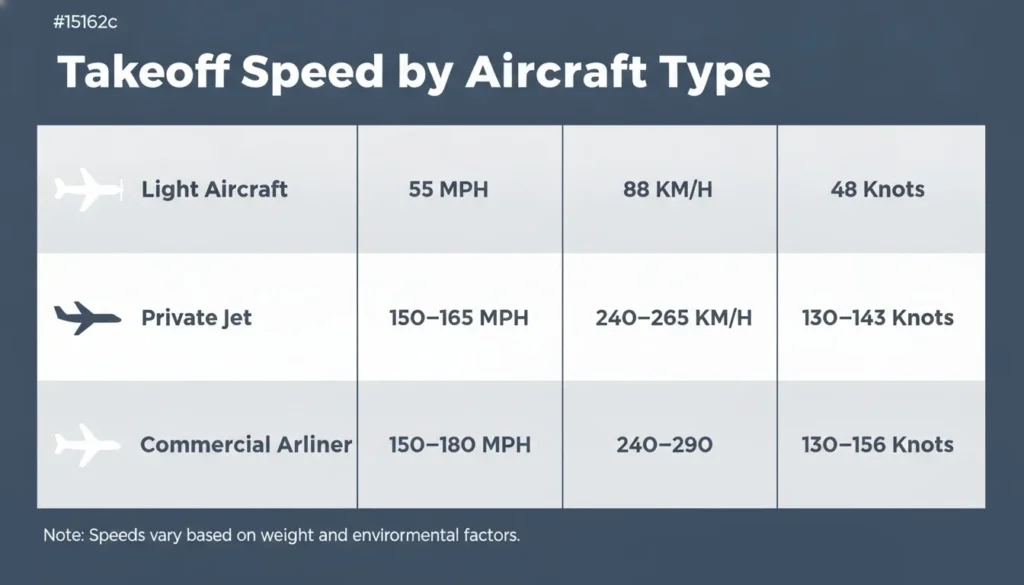
Different airplanes require different speeds to safely leave the ground. A tiny rental plane needs far less speed than a massive commercial jet carrying hundreds of passengers.
The table below breaks down exactly how fast does a plane go to take off, comparing common aircraft you might fly on or see at the airport.
| Aircraft Type | MPH | KMH | Knots |
|---|---|---|---|
| Cessna 172 (Small) | 63 | 101 | 55 |
| Boeing 737 | 150 | 241 | 130 |
| Airbus A320 | 170 | 274 | 148 |
| Private Jet (e.g., Gulfstream) | 165 | 266 | 143 |
| Boeing 747 | 180 | 290 | 156 |
| Concorde (Supersonic) | 225 | 362 | 195 |
Why Do These Speeds Vary?
Weight: Heavier planes like the Boeing 747 need to move much faster to generate enough lift to leave the runway.
Wing Size: Smaller planes like the Cessna have wings designed to lift the aircraft at incredibly low speeds.
Weather Conditions: Headwinds help a plane take off faster, while hot air or high altitudes require higher speeds.
How Does a Plane Reach Takeoff Speed? (0 to 160 MPH on Runway)

When you are sitting in your seat, the sudden burst of power you feel is the engines working at their hardest. It takes less time and distance than you might think to get a massive commercial jet into the sky.
Here is the simple timeline of what happens from the moment the brakes are released to the second you are airborne:
0–30 seconds: The engines roar at full thrust, pushing you back into your seat as the plane rapidly gains speed.
Around 150 mph: The pilot pulls back on the controls, and the nose of the plane lifts into the air (a moment pilots call “rotation”).
Around 160–180 mph: The main wheels leave the tarmac, and the aircraft officially achieves liftoff.
The Runway Breakdown: Distance and Acceleration
To understand how fast does a plane go to take off, it helps to look at the ground it needs to cover. A typical commercial airline runway is between 6,000 and 8,000 feet long.
The plane does not need the entire length just to leave the ground. Most standard jets use roughly 4,000 to 5,000 feet of that space to get airborne, leaving the rest as a safety cushion.
How fast do planes actually accelerate on the runway? The acceleration is surprisingly smooth and quick.
| Airplane Model | Average Takeoff Speed | Time on Runway |
|---|---|---|
| Boeing 737 (Short/Medium Flights) | ~150 mph | ~25 to 30 seconds |
| Boeing 777 (Long-Haul Flights) | ~180 mph | ~30 to 35 seconds |
Boeing 737 (Short/Medium Flights)
Average Takeoff Speed:
~150 mph
Time on Runway:
~25 to 30 seconds
Boeing 777 (Long-Haul Flights)
Average Takeoff Speed:
~180 mph
Time on Runway:
~30 to 35 seconds
A standard passenger jet accelerates at a rate that gets it from 0 to 160 mph in about 30 seconds. This is roughly equivalent to a family sedan going from 0 to 60 mph in 11 seconds—not quite a sports car, but powerful enough to launch hundreds of tons into the air.
Takeoff Speed vs Cruising Speed — They Are NOT the Same
A common misconception is that airplanes maintain the exact same speed from the moment they leave the ground until they land. In reality, a commercial airliner goes through three distinct speed phases during a flight.
| Flight Phase | Average Speed Range | What the Plane is Doing |
|---|---|---|
| Takeoff | 150 – 180 mph | Leaving the runway and heading into the air |
| Climb | 250 – 400 mph | Powering up to its final flying altitude |
| Cruise | 500 – 600 mph | Leveling off and traveling efficiently to the destination |
Takeoff
Average Speed Range
150 – 180 mph
What the Plane is Doing
Leaving the runway and heading into the air
Climb
Average Speed Range
250 – 400 mph
What the Plane is Doing
Powering up to its final flying altitude
Cruise
Average Speed Range
500 – 600 mph
What the Plane is Doing
Leveling off and traveling efficiently to the destination
To put this into perspective, how fast does a plane go to take off is only about a third of its actual cruising speed. The aircraft needs just enough speed to generate lift on the runway, and then it continues to accelerate as it climbs higher into thinner air.
Airspeed vs Ground Speed — Simple Explanation
Imagine you are driving on a highway at 60 mph, and you step onto a moving walkway that is also going 10 mph in the same direction. To someone standing on the side of the highway, you look like you are traveling at 70 mph.
Airplanes experience this exact same effect due to high-altitude winds, which creates two different types of speed:
Airspeed: How fast the airplane is moving through the air around it.
Ground Speed: How fast the airplane is actually moving over the ground below.
If a Boeing 737 has an airspeed of 550 mph and catches a 50 mph tailwind pushing it from behind, its ground speed becomes 600 mph. If you were driving on a highway directly underneath that plane, it would be passing you at that 600 mph ground speed.
Why Does a Plane Need 150–180 MPH Just to Take Off?
To get a massive piece of metal into the air, the wings need a rush of fast-moving air underneath them to create an upward push called lift.
The heavier the aircraft, the more speed it requires to generate enough lift, which is why large jumbo jets need longer runways to accelerate.
Special wing parts called flaps slide out during takeoff to extra-inflate the wings, helping the plane climb safely at lower speeds.
What Does Takeoff Feel Like at 160 MPH?
As the plane accelerates down the runway, you will feel a firm push back into your seat, which is just a natural reaction to the sudden speed.
You will know the wheels have officially left the ground when the bumpy vibrations of the runway instantly turn into a smooth, floating sensation.
This intense burst of power is completely normal, highly controlled, and lasts for only about 30 to 40 seconds before the plane settles into a steady climb.
First-time flyer tip: Book a window seat over or just ahead of the wing so you can watch the ground drop away, which helps your brain process the movement and eases any nerves.
How Does Takeoff Speed Compare to Landing Speed?

While you might expect airplanes to fly at the same speed when leaving and returning to the ground, they actually land a bit slower than they take off.
Takeoff vs. Landing Speed Comparison
Here is how the speeds compare for two of the most common commercial aircraft you might fly on:
| Phase | Boeing 737 | Boeing 747 |
|---|---|---|
| Takeoff | 150 mph | 180 mph |
| Landing | 145 mph | 160 mph |
Why is landing speed lower?
Airplanes land at a lower speed because they are much lighter at the end of a flight after burning thousands of gallons of heavy fuel. Because the plane weighs less, the wings do not need as much speed to keep the aircraft safely in the air.
Frequently Asked Questions – Bus from Pearson to London
A commercial Boeing 737 typically leaves the ground at around 150 mph (240 km/h). The exact speed changes slightly depending on how much fuel and luggage the plane is carrying.
Small, lightweight planes like a Cessna can take off at just 55 mph (88 km/h). Because they weigh so little, they do not need much speed to generate enough lift to fly.
For most standard commercial airlines, it takes about 30 to 35 seconds of sprinting down the runway to hit takeoff speed.
Yes, weight plays a major role. A heavier plane requires more airflow under the wings to lift off, meaning a fully loaded jet must travel faster than an empty one to leave the ground.
No, planes fly much faster once they are up in the air. While a plane lifts off at around 150 to 180 mph, its cruising speed at high altitudes is usually between 500 and 600 mph.
Explore Airport Topics
Our Services
Featured Travel Guides
Billy Bishop Airport Limo Cost
Wedding Limo Timeline Planning Guide Toronto
Pearson Airport Ground Transportation
Hamilton Airport Ground Transportation
Executive vs Luxury Limo Toronto
Toronto Airport Limo vs Uber — Cost Comparison
View All Travel Guides →Industry & Safety Standards
Our Service Guarantee
Every guide is written from real chauffeur and dispatch experience — flat-rate pricing, licensed vehicles and 24/7 flight-monitored pickups across Toronto & the GTA.
24/7 Quick Response
+1 (647) 654-4915